
Fluid Loss vs Lost Circulation in HDD: PAC/CMC or LCM?
Fluid loss is primarily a filtration-control problem. Lost circulation is primarily a whole-mud sealing problem. The first field question is whether filtrate is entering the formation or the circulating mud itself is disappearing.
Liquid phase enters a permeable formation while a filtercake remains behind.
A meaningful portion of the whole drilling fluid escapes into fractures, gravel, voids or other loss pathways.
Use filtration-control chemistry when returns remain broadly intact and the filtercake needs improvement.
Use bridging/sealing materials when whole mud is leaving the circulating system.
Where MUDOPAC-LV fits
MUDOPAC-LV is the lower-rheology PAC route where filtration control is required without deliberately adding a large viscosity contribution. This is useful when the active fluid already has enough carrying capacity.
Where MUDOPAC-HV and MUDOFIL-CMC fit
MUDOPAC-HV combines filtration control with greater rheological contribution. MUDOFIL-CMC provides a CMC-based filtration route for compatible water-based systems. Selection should consider water quality, salinity, rheology and the rest of the formulation.
Why severe losses need a different mechanism
A large fracture, coarse gravel interval or void is much larger than a normal filtercake pore. Increasing PAC/CMC may thicken the active mud while the loss pathway remains open. SEALFIBER creates a fibrous bridging network; FRACPLUG contributes a swelling/polymeric void-filling mechanism where compatible.
Loss severity changes the programme
Seepage, partial, severe and total loss should not receive the same LCM strategy. Size distribution, pumping restrictions, recycler/screens and bore geometry all affect what can be placed safely.
PAC/CMC and LCM can be complementary
In some jobs the LCM provides the structural bridge while filtration-control polymers reduce fluid movement through the developing seal. The combined package must still remain pumpable through the actual HDD equipment.
A good filter-press result does not prove that the bore cannot lose whole mud
Laboratory filtration represents filtercake-scale fluid loss, not a large fracture, gravel void or open channel. Always compare test results with the actual pumped-versus-returned volume balance.
What Mudolog needs from you
Send the field variables that change the fluid decision. A short, technically complete HDD RFQ is more useful than a generic request for “mud chemical price”.
- Formation type
- Bore diameter
- Drilling stage
- Approximate loss rate
- Whether any returns remain
- Current formulation
- Viscosity if available
- Interval where losses started
- Pump/tooling/recycler restrictions
Products by field function
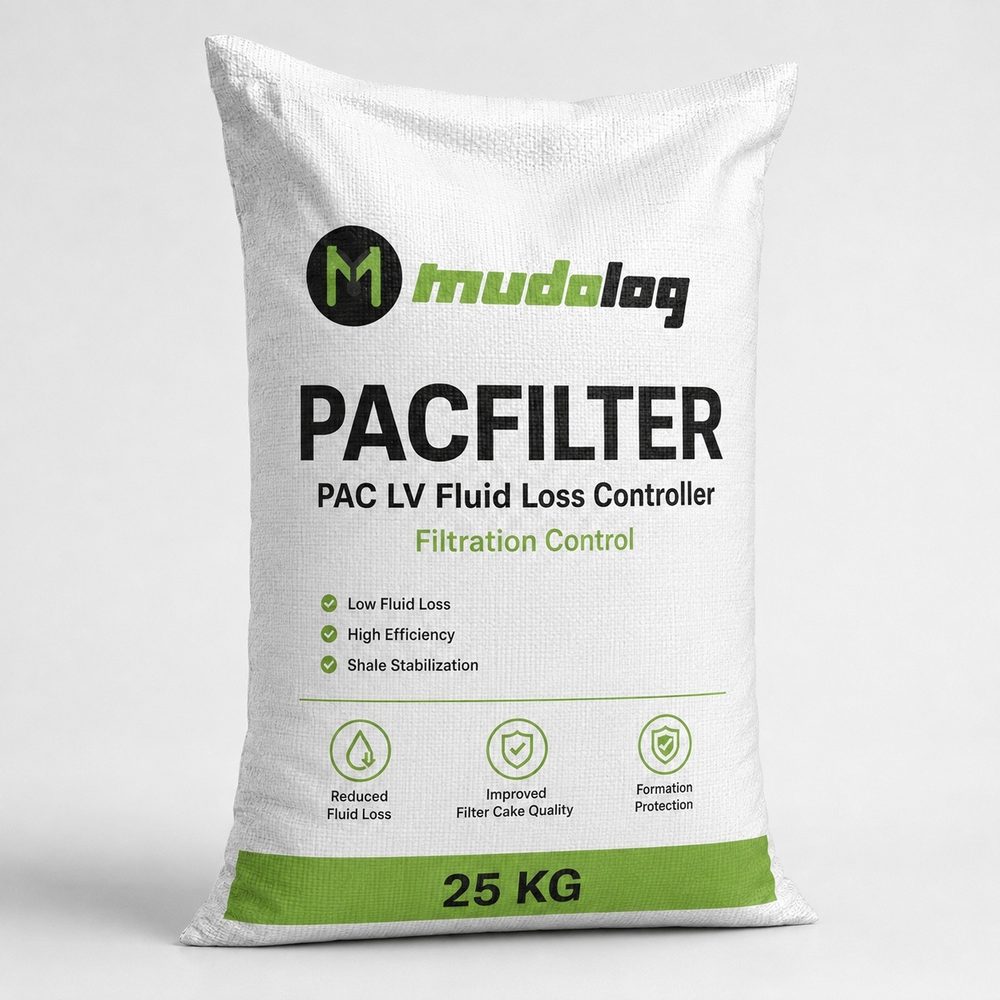 MUDOPAC-LVPAC LV Fluid Loss Controller
PAC LV fluid loss additive for low-viscosity filtration control and stable filter cake formation.
View product →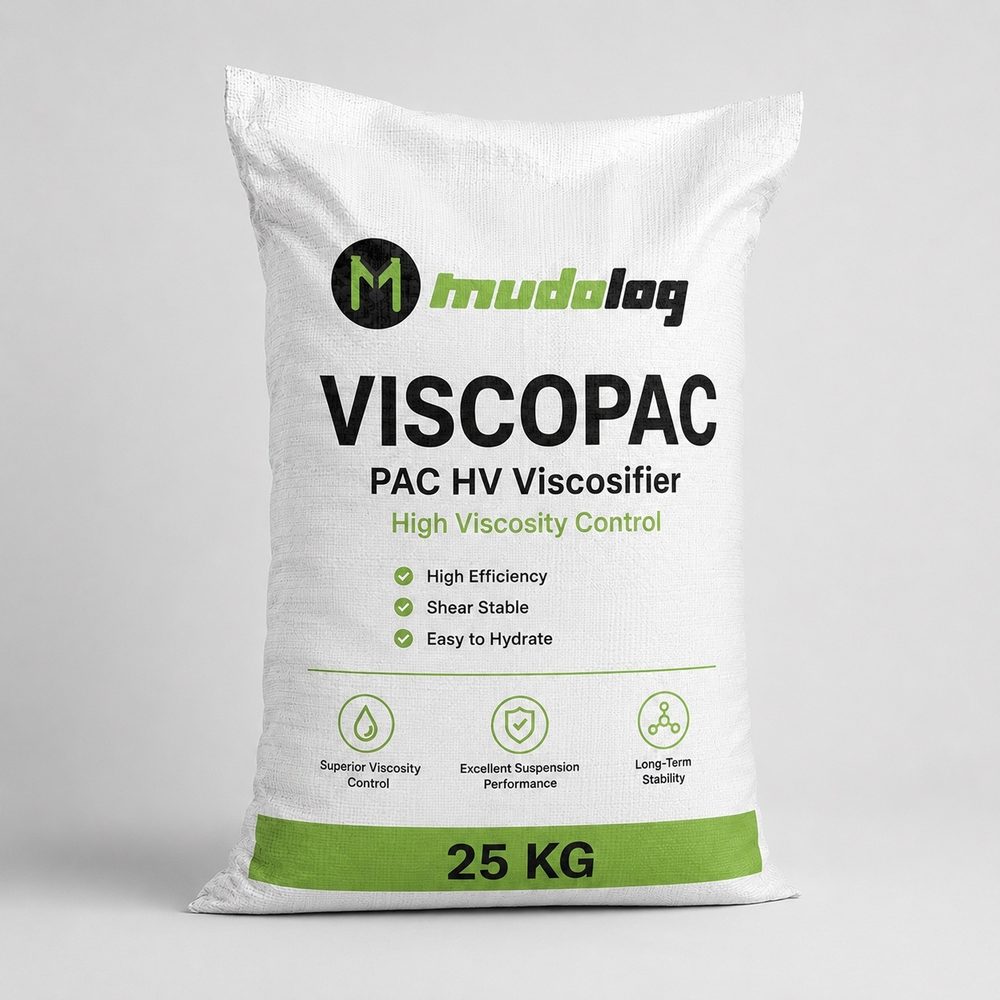 MUDOPAC-HVPAC HV Viscosifier
PAC HV additive for viscosity, carrying capacity and filtration control.
View product →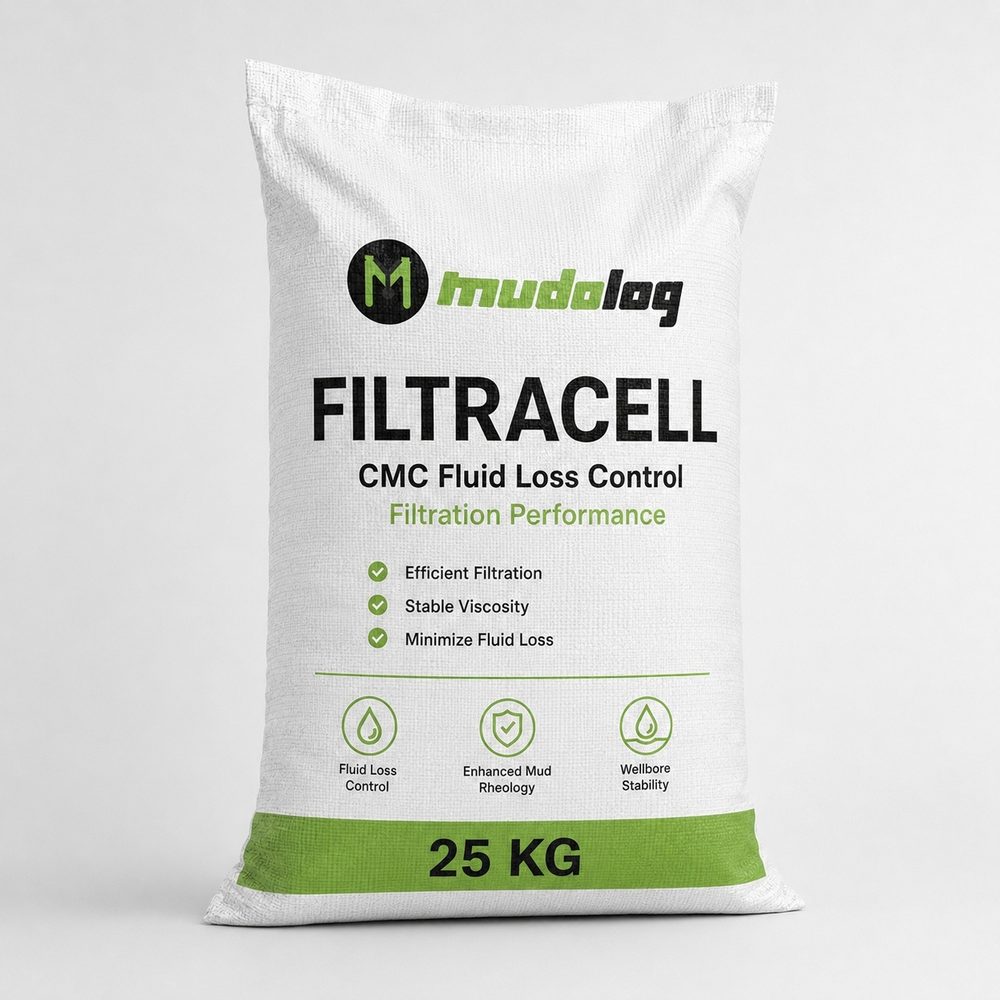 MUDOFIL-CMCCMC Fluid Loss Control
CMC-based economical fluid loss control additive for water-based mud systems.
View product →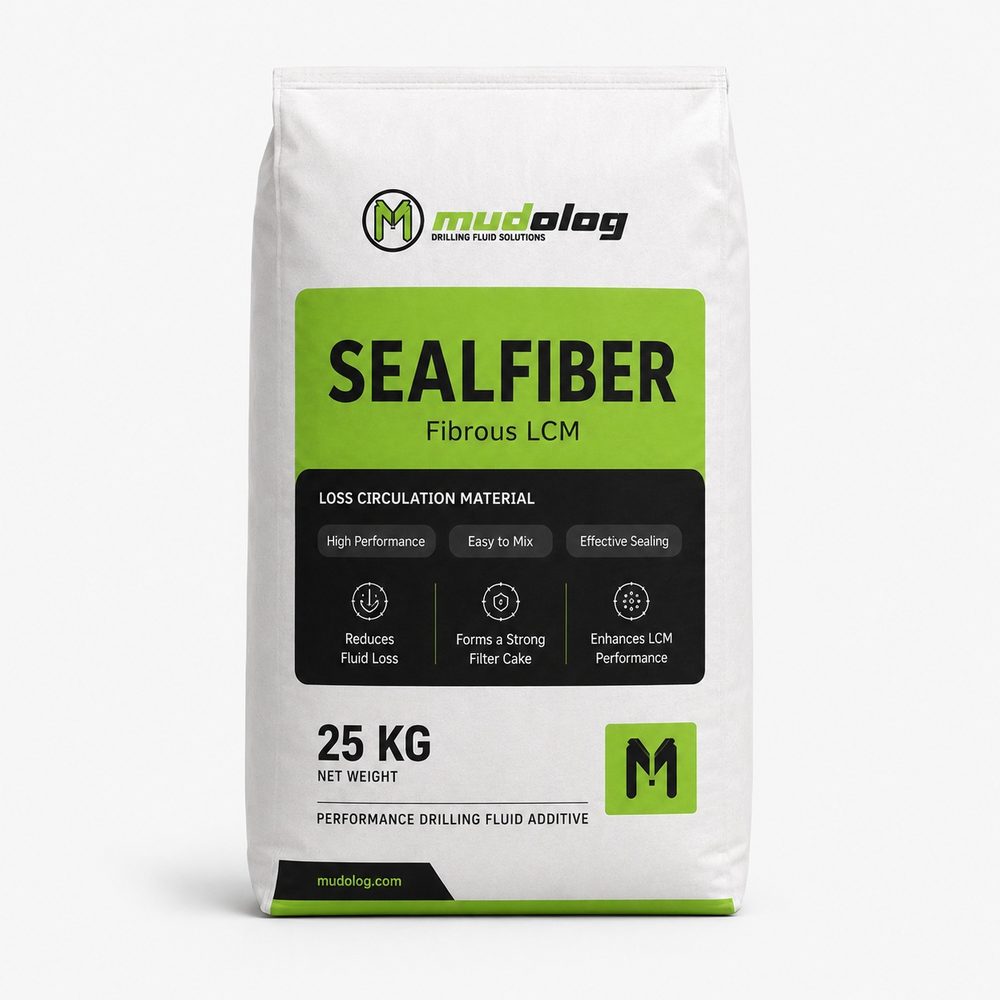 SEALFIBERFibrous LCM
Fibrous lost circulation material for bridging and sealing permeable zones.
View product → FRACPLUGSwelling LCM
Swelling lost circulation material for fractures, voids and highly permeable formations.
View product →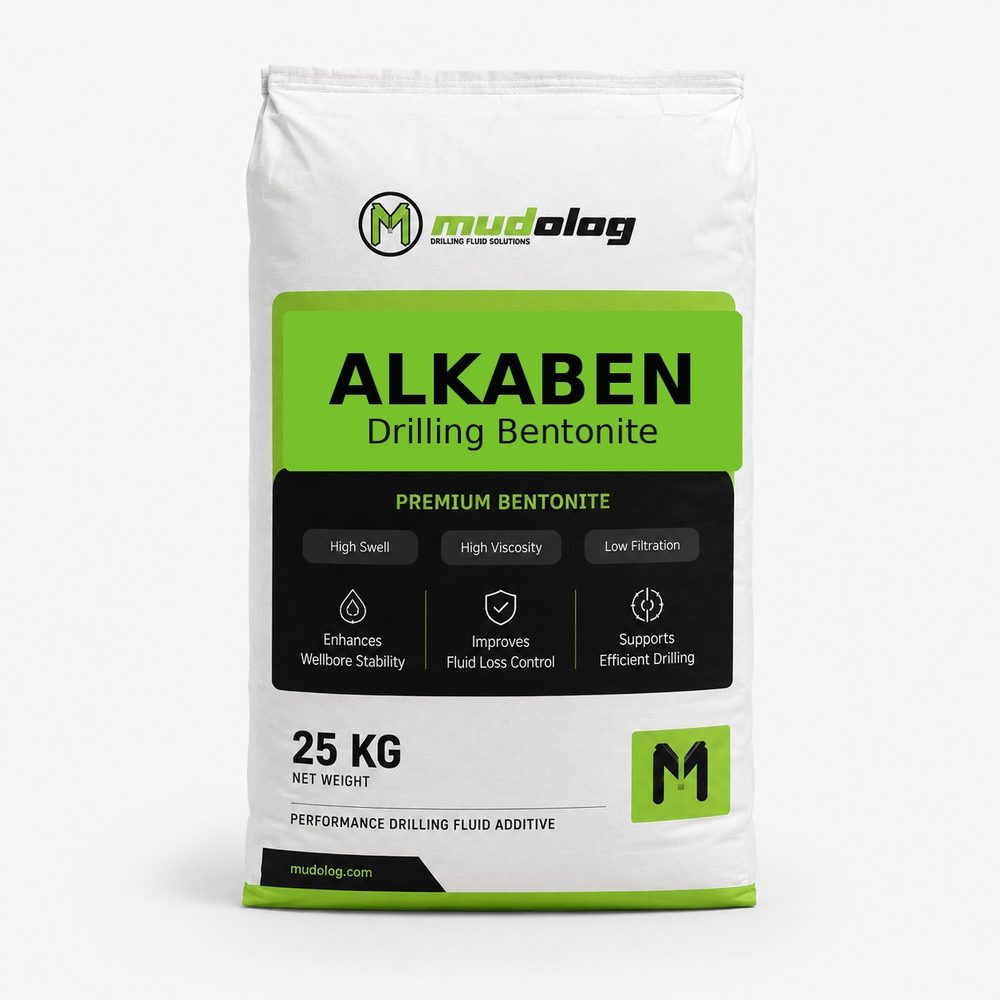 ALKABENDrilling Bentonite
Bentonite-based drilling additive supplied in 25 kg bags.
View product →Build the fluid around the actual water, formation and field symptom
Share the bore geometry, make-up water, current mud, returns and the specific clay, cleaning, filtration, friction or loss problem. Mudolog can then route the enquiry to the correct product function.