
HDD Mud Testing in the Field: What to Measure and What Each Result Means
The goal is not to turn the HDD crew into a laboratory. A few simple measurements can show whether the real problem is water quality, solids accumulation, rheology, filtration, contamination, reactive clay or actual whole-mud loss.
pH, hardness, calcium and conductivity explain many hydration and compatibility problems.
Funnel viscosity, mud weight and sand content help separate rheology from solids accumulation.
A filter test supports PAC/CMC selection but does not diagnose a large loss zone.
Cuttings, tooling and pumped-versus-returned volume are practical tests too.
Test the water before the chemical
If a known product works in clean water but fails on site, compare pH, hardness, calcium and conductivity. SODA ASH may be the correct first treatment for hard make-up water; SODIUM BICARBONATE is more specific to cement/lime contamination; CITRIC ACID belongs to controlled correction where the chemistry justifies it.
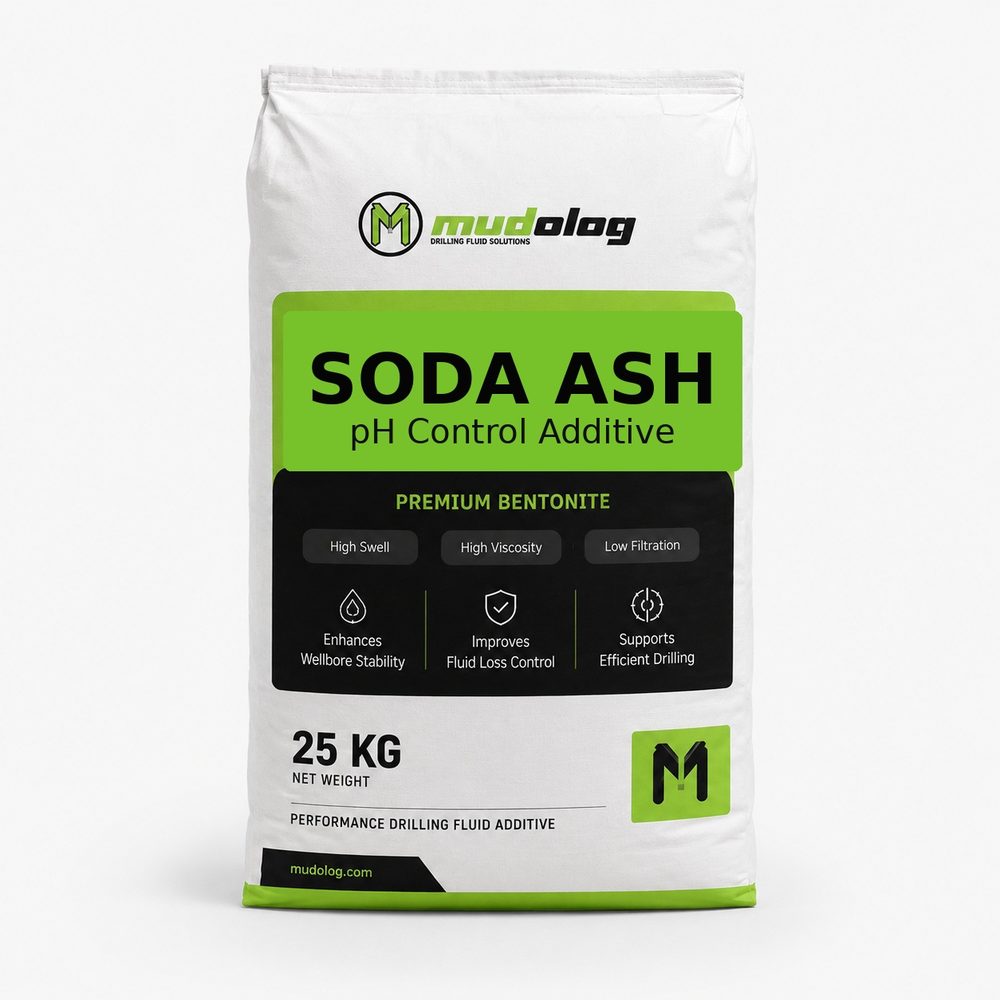 SODA ASHpH Control Additive
Soda ash for pH, alkalinity and make-up water conditioning.
View product →SODIUM BICARBONATECement & Lime Contamination TreatmentSodium bicarbonate for controlled treatment of cement/lime contamination and alkalinity in compatible water-based drilling fluids.
View product →CITRIC ACIDpH & Contamination Control AdditiveCitric acid for controlled pH reduction and selected contamination or cleanup applications in compatible drilling-fluid systems.
View product →Interpret Marsh funnel together with solids
High funnel viscosity can mean useful carrying capacity, excessive bentonite, dispersed reactive clay, accumulated fines or too much polymer. Low viscosity can mean insufficient rheology, but it does not automatically mean “add bentonite”. Use MUDOZAN, ALKABEN or other products only after identifying what the system lacks.
Mud weight and sand content tell different stories
A rising mud weight can reveal solids accumulation even when measured sand is not especially high, because fine dispersed clay may not appear as coarse sand. This combination is especially important in reactive formations and connects directly to POLYWELL, solids removal and dilution strategy.
Use filtration to route PAC/CMC selection
High filtration with full returns points toward MUDOPAC-LV, MUDOPAC-HV or MUDOFIL-CMC depending on the desired rheological contribution. If whole mud is disappearing, switch the diagnosis to actual lost circulation and evaluate SEALFIBER/FRACPLUG instead.
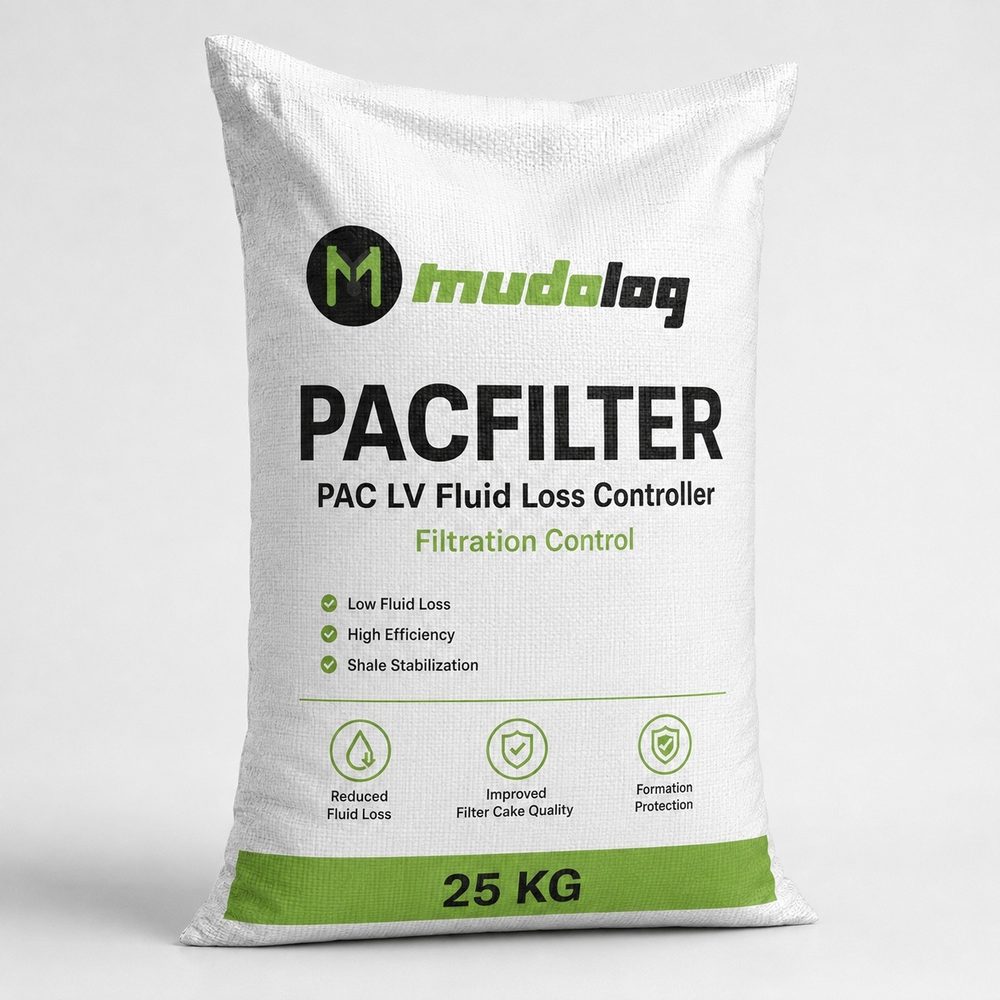 MUDOPAC-LVPAC LV Fluid Loss Controller
PAC LV fluid loss additive for low-viscosity filtration control and stable filter cake formation.
View product →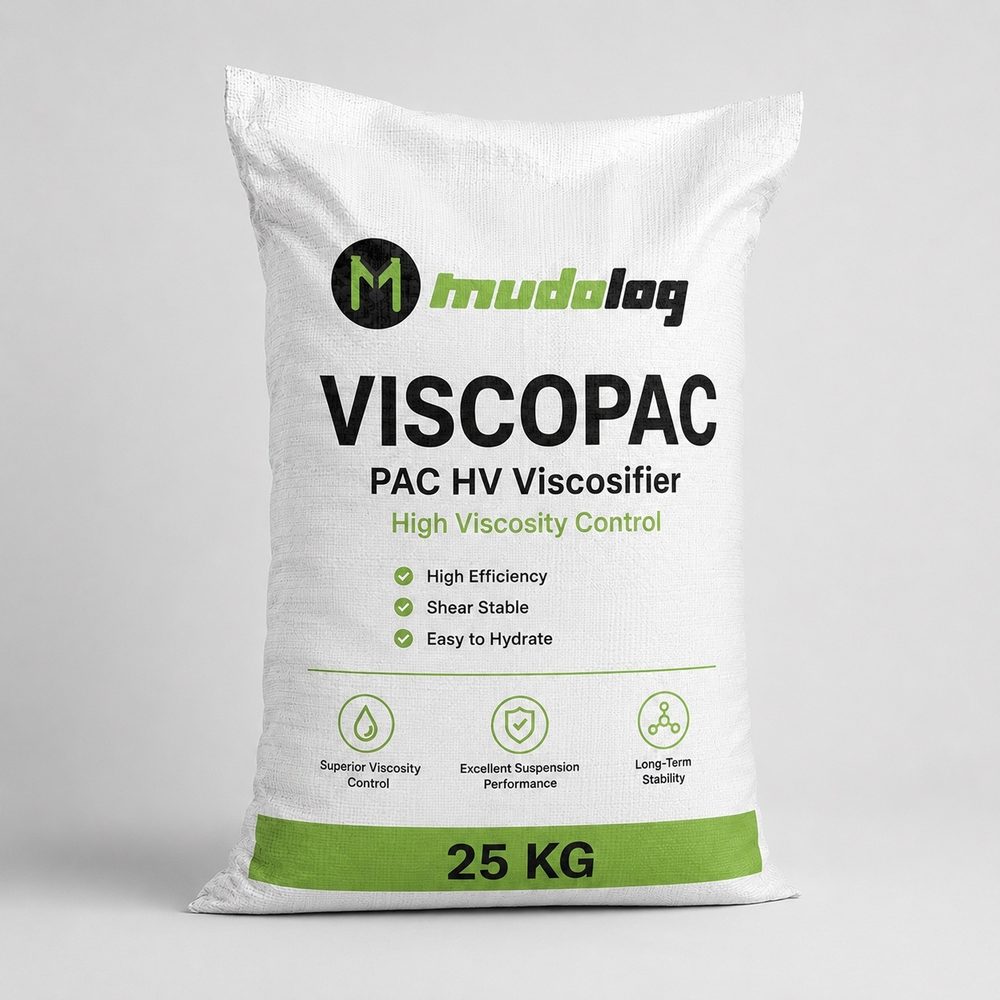 MUDOPAC-HVPAC HV Viscosifier
PAC HV additive for viscosity, carrying capacity and filtration control.
View product →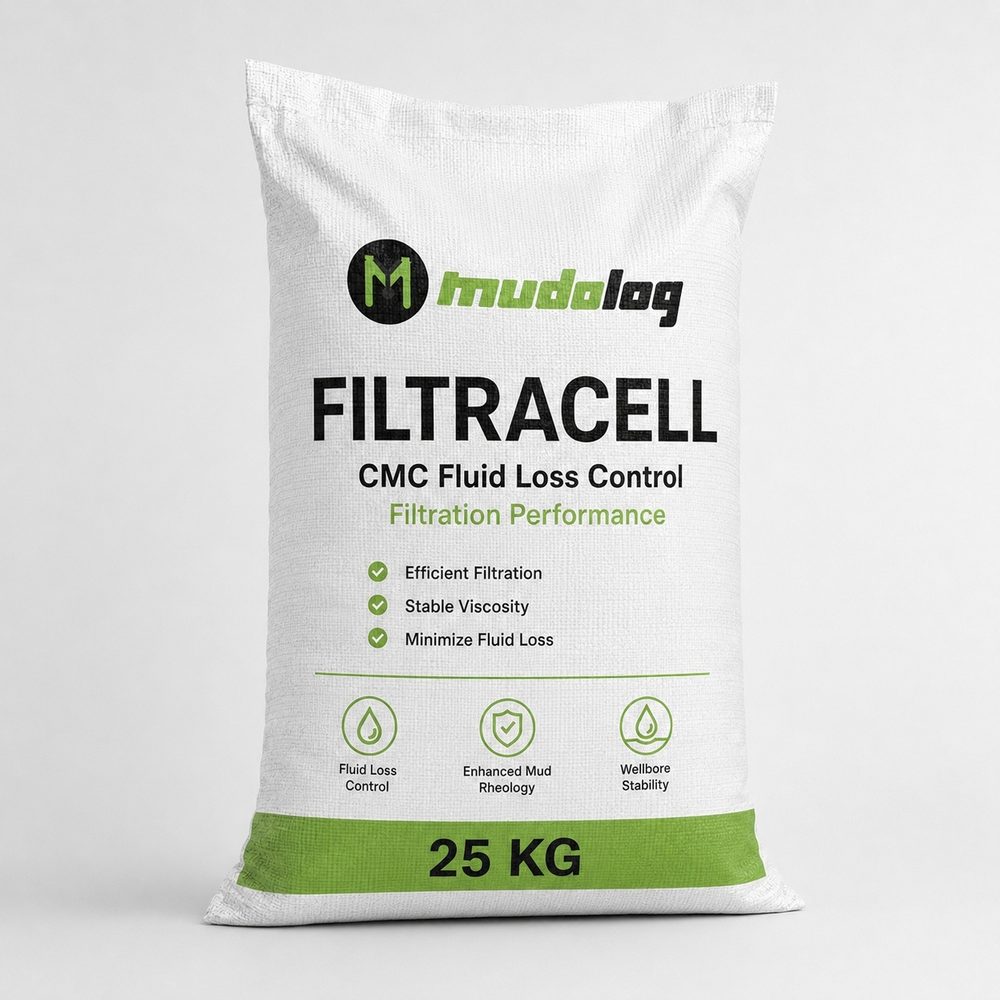 MUDOFIL-CMCCMC Fluid Loss Control
CMC-based economical fluid loss control additive for water-based mud systems.
View product →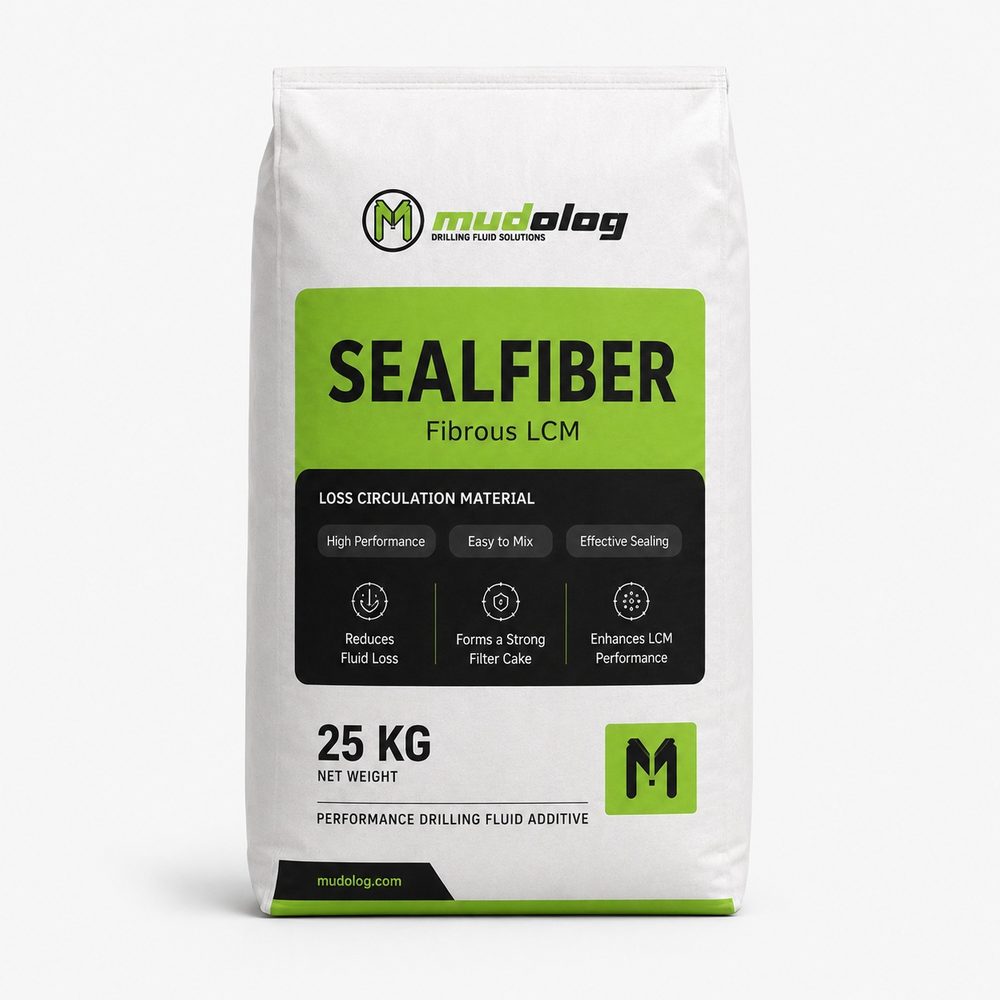 SEALFIBERFibrous LCM
Fibrous lost circulation material for bridging and sealing permeable zones.
View product → FRACPLUGSwelling LCM
Swelling lost circulation material for fractures, voids and highly permeable formations.
View product →Look at the cuttings and tooling
Sticky/smeared cuttings and packed tooling point toward reactive clay and balling. Intact cuttings that are not reaching surface point more toward transport. A clean bore with persistent friction makes MUDOLUBE more relevant than a clay-control product.
Track returns and foam
Pumped-versus-returned volume can identify a loss problem before any laboratory test. Surface foam can obscure tank volume and solids-control behavior; where unwanted foam is the operational issue, MUDODEF is the dedicated Mudolog defoamer function.
Do not chase one number
High viscosity with stable density and good returns is a different system from high viscosity with rising density and poor returns. Interpret measurements as a pattern, make one technically justified adjustment, then measure again.
What Mudolog needs from you
Send the field variables that change the fluid decision. A short, technically complete HDD RFQ is more useful than a generic request for “mud chemical price”.
- Water source
- pH and hardness
- Conductivity if relevant
- Marsh funnel viscosity
- Mud weight
- Sand content
- Filtration result if available
- Formation
- Current dosages
- Return condition
- Photos of cuttings/tooling if available
Products by field function
SODA ASHpH Control AdditiveSoda ash for pH, alkalinity and make-up water conditioning.
View product →SODIUM BICARBONATECement & Lime Contamination TreatmentSodium bicarbonate for controlled treatment of cement/lime contamination and alkalinity in compatible water-based drilling fluids.
View product →CITRIC ACIDpH & Contamination Control AdditiveCitric acid for controlled pH reduction and selected contamination or cleanup applications in compatible drilling-fluid systems.
View product →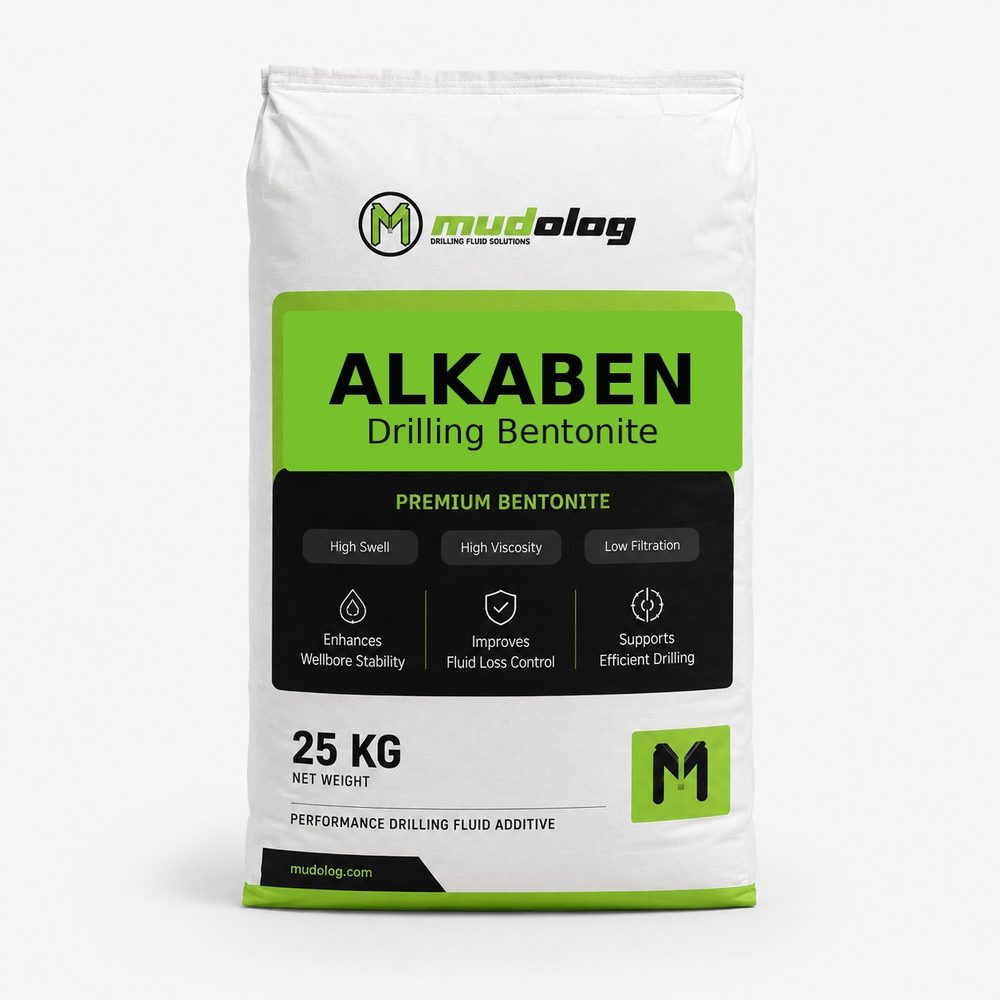 ALKABENDrilling Bentonite
Bentonite-based drilling additive supplied in 25 kg bags.
View product → POLYWELLPowder Drilling Polymer
Powder drilling polymer for viscosity, cuttings transport, clay control and borehole stability.
View product →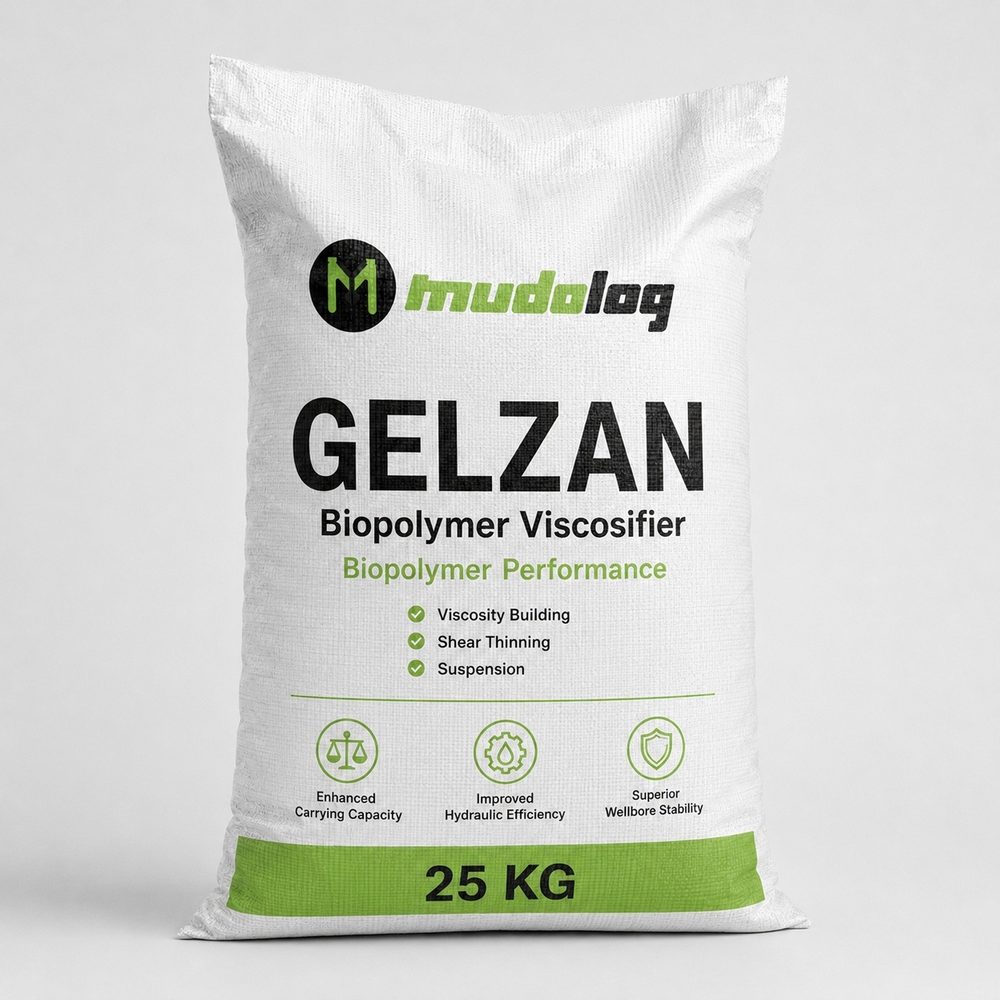 MUDOZANBiopolymer Viscosifier
Biopolymer viscosifier for strong low-shear viscosity, suspension and carrying capacity.
View product →MUDOPAC-LVPAC LV Fluid Loss ControllerPAC LV fluid loss additive for low-viscosity filtration control and stable filter cake formation.
View product →MUDOPAC-HVPAC HV ViscosifierPAC HV additive for viscosity, carrying capacity and filtration control.
View product →MUDOFIL-CMCCMC Fluid Loss ControlCMC-based economical fluid loss control additive for water-based mud systems.
View product → MUDOLUBEDrilling Lubricant
Liquid drilling lubricant for water-based mud systems where friction, torque, drag and sticking tendency must be controlled.
View product →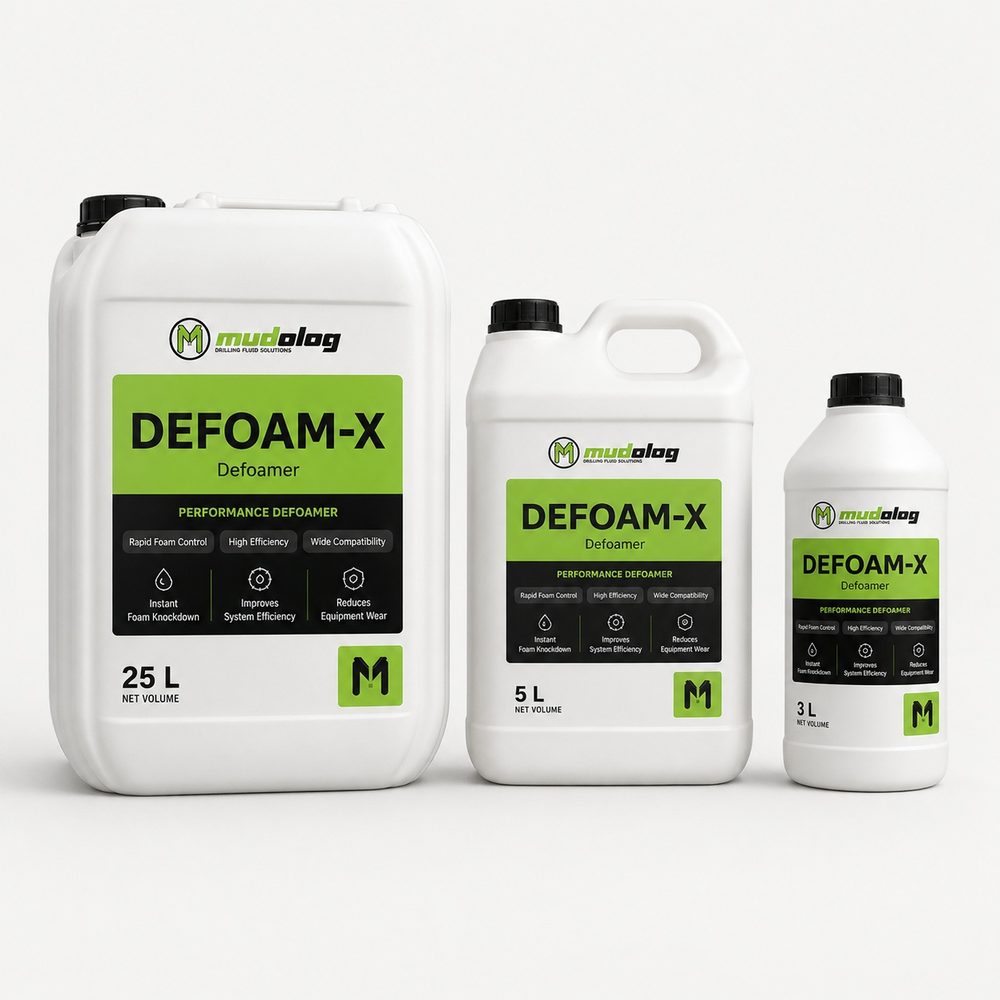 MUDODEFDefoamer
Defoamer for rapid foam knockdown in mud tanks, pumps and circulation systems.
View product →SEALFIBERFibrous LCMFibrous lost circulation material for bridging and sealing permeable zones.
View product →FRACPLUGSwelling LCMSwelling lost circulation material for fractures, voids and highly permeable formations.
View product →Build the fluid around the actual water, formation and field symptom
Share the bore geometry, make-up water, current mud, returns and the specific clay, cleaning, filtration, friction or loss problem. Mudolog can then route the enquiry to the correct product function.