
Hole Cleaning in HDD: Why More Viscosity Is Not Always the Answer
Hole cleaning is a transport problem. Fluid rheology matters, but so do annular flow, cuttings generation, bore geometry, reaming practice and the condition of the drilled solids.
Enough fluid must move through the annulus to transport the solids being generated.
The fluid needs useful suspension and shear-thinning behavior, not simply maximum funnel viscosity.
Reactive or accumulated solids can thicken the active mud while hole cleaning gets worse.
If cuttings are generated faster than they are removed, the bore progressively loads up.
Why HDD is difficult to clean
Long horizontal and low-angle sections allow cuttings to settle on the low side. Once a bed forms, circulation may pass over it rather than remove it. This is why apparently normal returns do not guarantee a clean bore.
MUDOZAN vs MUDOPAC-HV
MUDOZAN is the cleaner rheology/suspension function where additional low-shear carrying capacity is required. MUDOPAC-HV can add both filtration control and rheological contribution. Choose according to the missing function rather than calling both products “thickeners”.
Reactive clay changes the transport problem
If cuttings disperse into fines, the active mud can become progressively thicker while solids-control efficiency falls. POLYWELL supports cuttings integrity and reactive-solids control so the drilled material remains easier to transport and separate.
Hole cleaning vs lubrication
High torque with poor returns, rising pressure or heavy solids accumulation points first to cleaning. MUDOLUBE becomes more directly relevant where the bore is clean and mechanical/frictional drag remains.
Reaming must match removal capacity
The useful comparison is cuttings generation rate versus cuttings removal capacity. A slower controlled pass can outperform aggressive reaming if the latter overloads the fluid and leaves a cuttings bed behind.
Do not use Marsh funnel viscosity as the whole diagnosis
Two fluids with similar funnel viscosity can have very different solids loading, low-shear suspension, filtration and polymer content. Interpret viscosity together with returns, density, sand content and formation behavior.
What Mudolog needs from you
Send the field variables that change the fluid decision. A short, technically complete HDD RFQ is more useful than a generic request for “mud chemical price”.
- Bore length
- Current bore / reamer diameter
- Formation
- Drilling or reaming stage
- Approximate flow / pump capacity if known
- Current formulation
- Marsh funnel if available
- Whether full returns are maintained
- Main symptom: torque, pressure, settling or poor returns
Products by field function
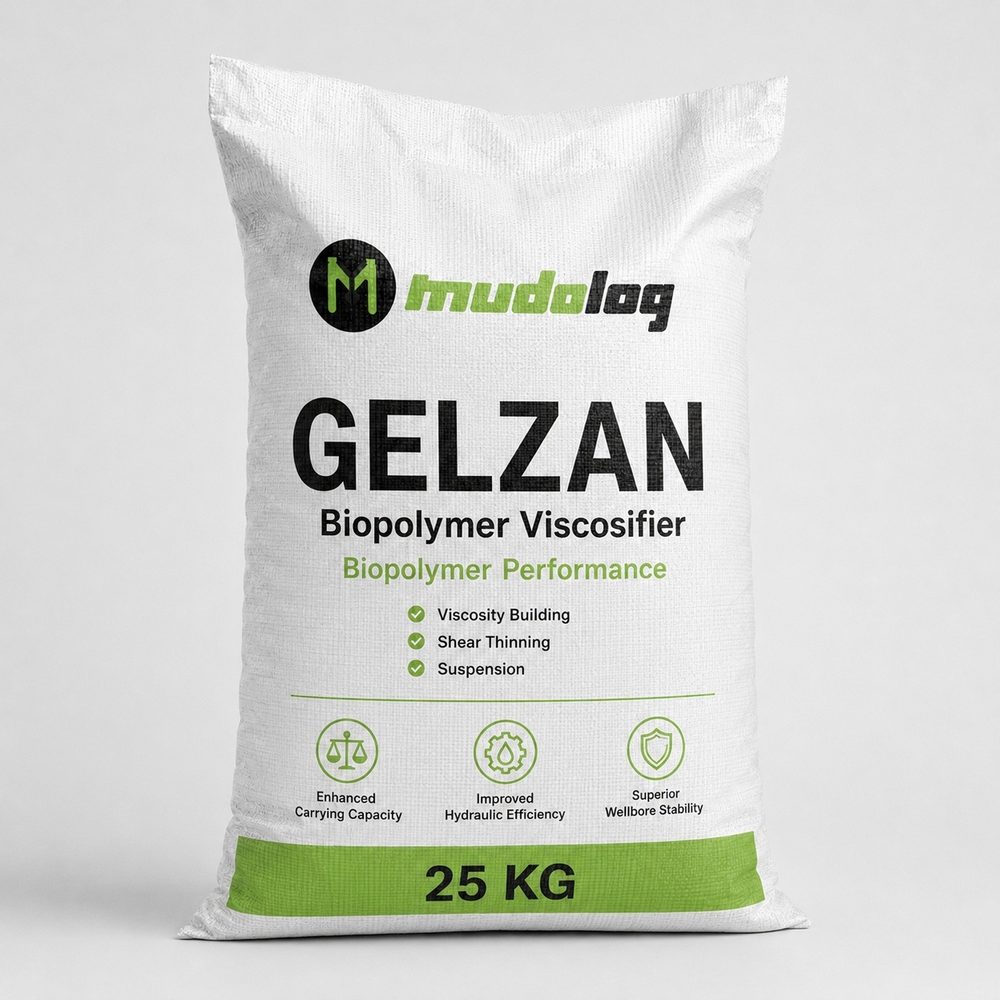 MUDOZANBiopolymer Viscosifier
Biopolymer viscosifier for strong low-shear viscosity, suspension and carrying capacity.
View product → POLYWELLPowder Drilling Polymer
Powder drilling polymer for viscosity, cuttings transport, clay control and borehole stability.
View product →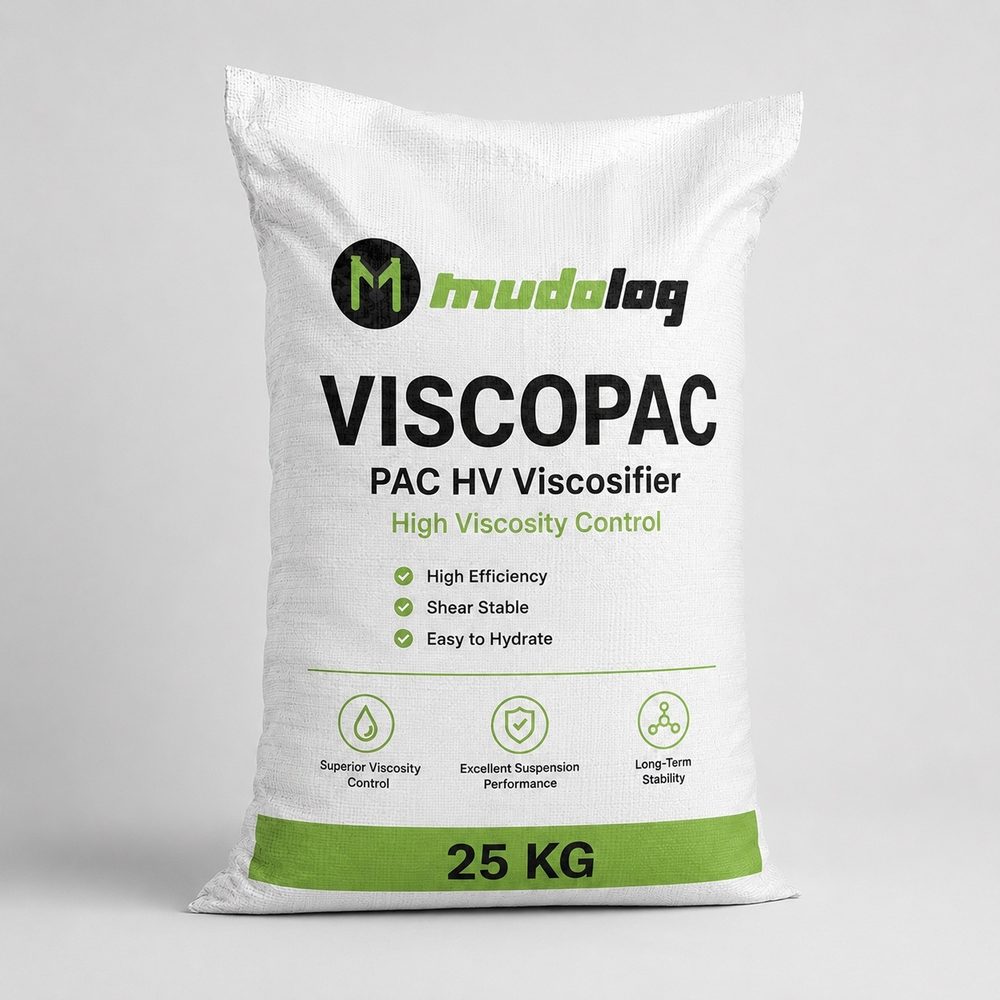 MUDOPAC-HVPAC HV Viscosifier
PAC HV additive for viscosity, carrying capacity and filtration control.
View product →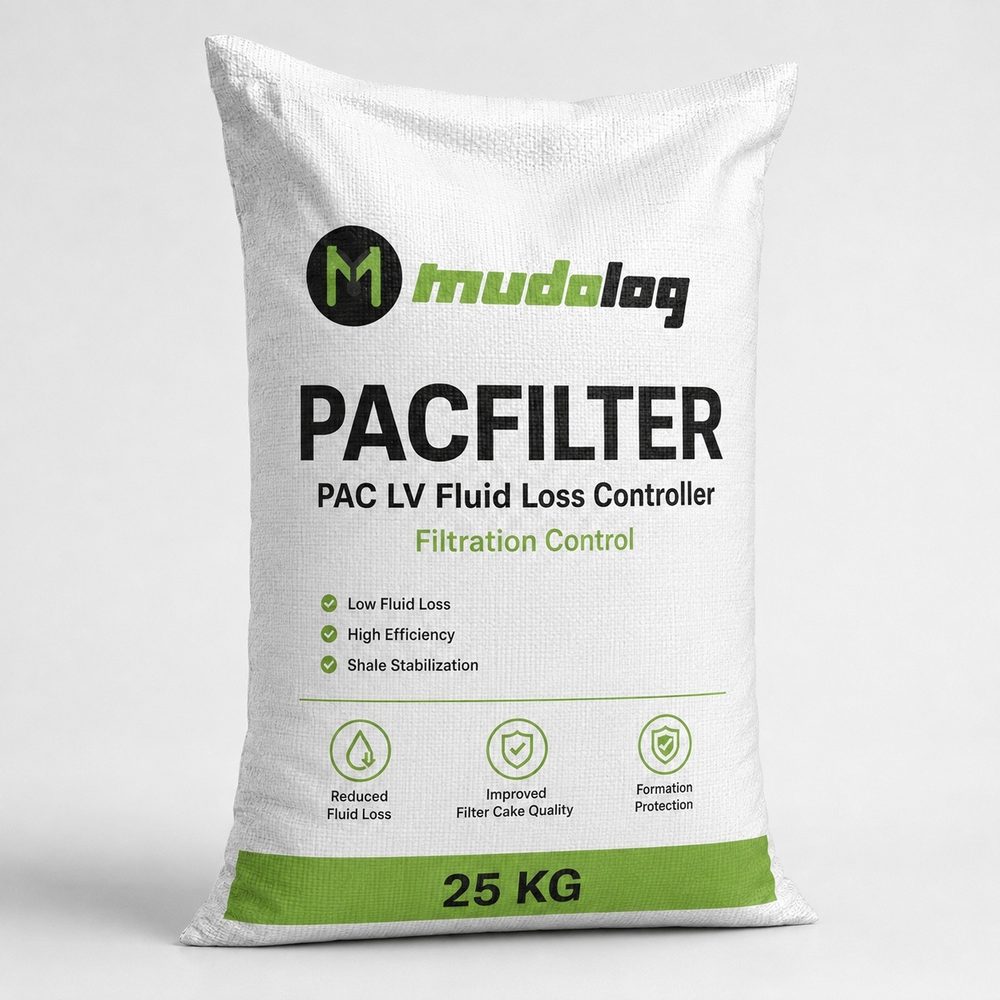 MUDOPAC-LVPAC LV Fluid Loss Controller
PAC LV fluid loss additive for low-viscosity filtration control and stable filter cake formation.
View product → MUDOLUBEDrilling Lubricant
Liquid drilling lubricant for water-based mud systems where friction, torque, drag and sticking tendency must be controlled.
View product →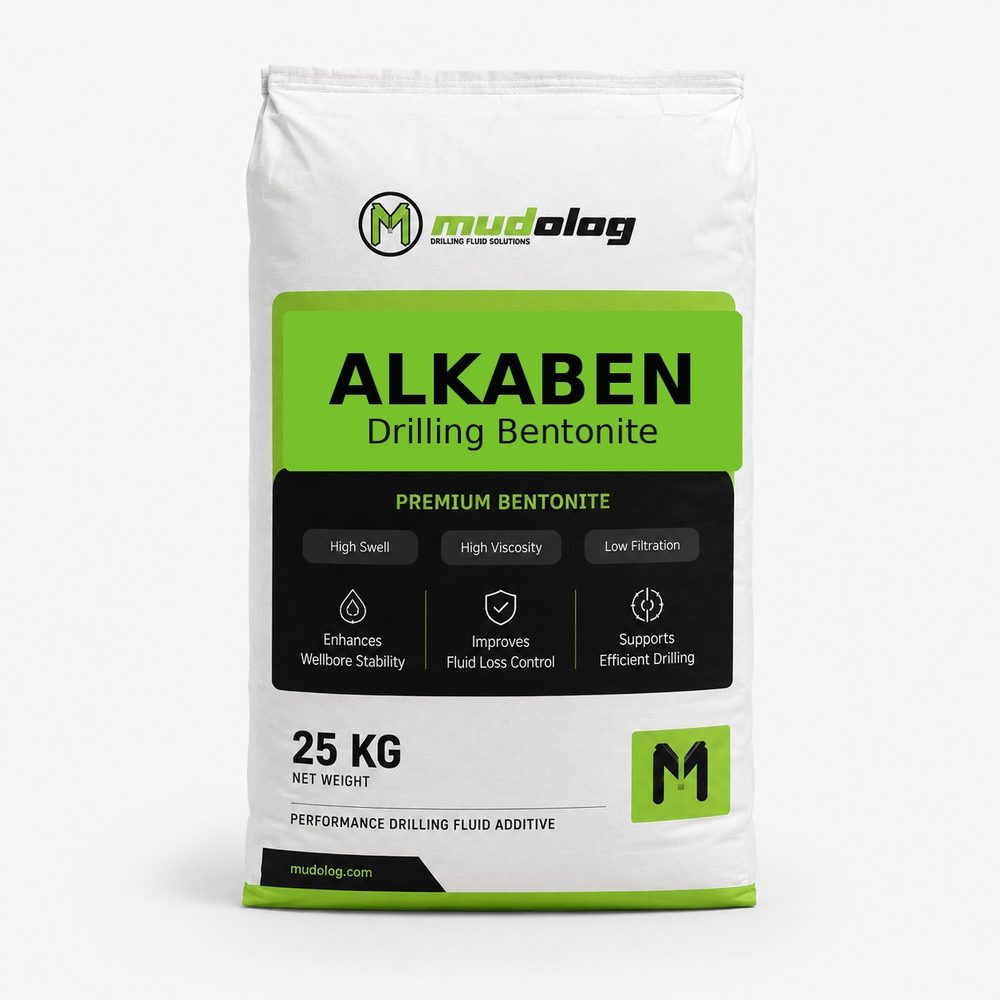 ALKABENDrilling Bentonite
Bentonite-based drilling additive supplied in 25 kg bags.
View product →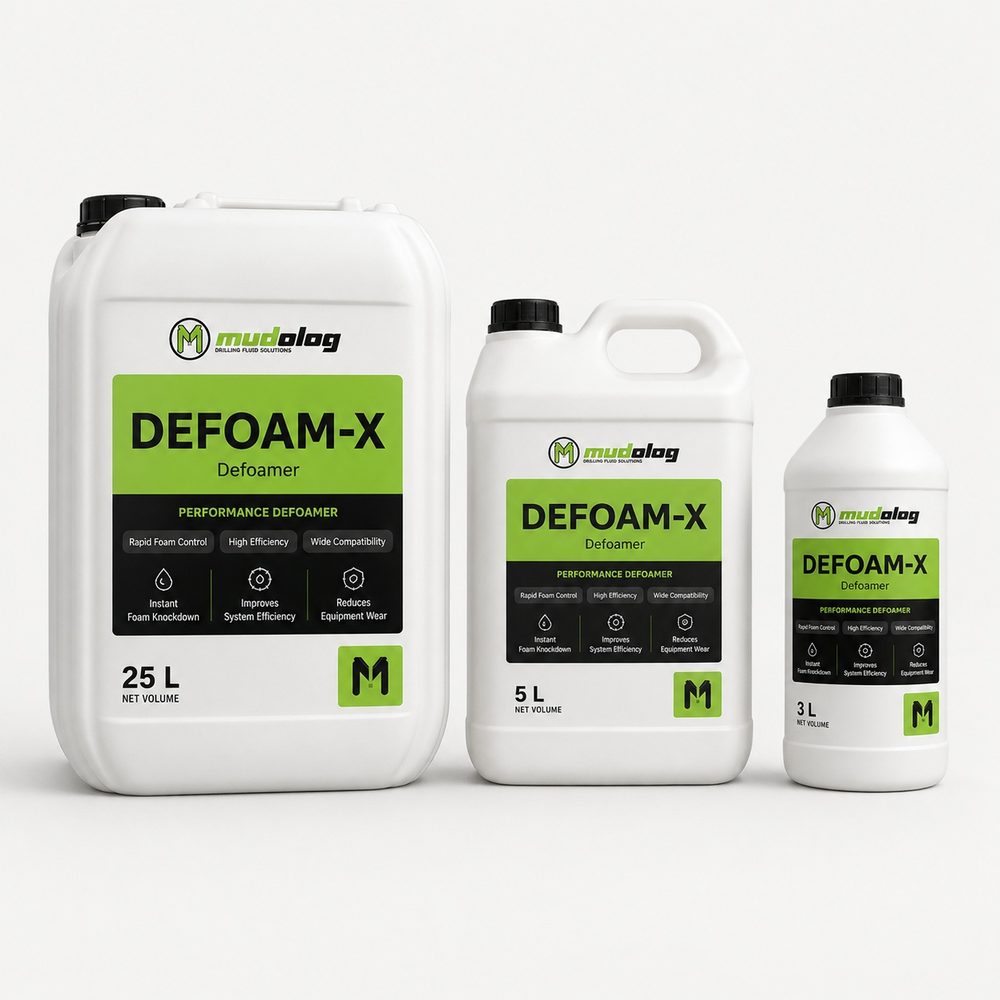 MUDODEFDefoamer
Defoamer for rapid foam knockdown in mud tanks, pumps and circulation systems.
View product →Build the fluid around the actual water, formation and field symptom
Share the bore geometry, make-up water, current mud, returns and the specific clay, cleaning, filtration, friction or loss problem. Mudolog can then route the enquiry to the correct product function.