
Reactive Clay in HDD: Inhibition vs Encapsulation vs Dispersion Control
Sticky cuttings, bit or reamer balling, rising torque and progressive mud thickening can all start with reactive clay. The first task is to separate formation swelling from cuttings dispersion and solids accumulation.
Reduce clay–water interaction, hydration and swelling where formation stability is the main problem.
Keep drilled clay and cuttings more coherent so they are less likely to break down into ultrafine solids.
Limit the amount of reactive clay that becomes part of the active mud and drives viscosity/solids upward.
MUDOLUBE targets friction; it does not replace clay control or hole cleaning.
Reactive clay creates two problems at once
The bore wall may hydrate or soften while the drilled material breaks down into fine solids. A system can therefore need formation inhibition and cuttings encapsulation at the same time. Treating every symptom with a single polymer hides this distinction.
Where POLYWELL fits
POLYWELL supports cuttings integrity and reactive-solids control. Its value is not simply higher viscosity. The commercial objective is a cleaner, more manageable low-solids fluid where drilled reactive material remains easier to transport and separate.
Where MUDOCLAY-OFF fits
MUDOCLAY-OFF belongs to the clay-stabilization/inhibition side of the programme. If the dominant problem is formation hydration or swelling rather than cuttings breakdown, a dedicated inhibition route may be required in addition to encapsulation.
Why high torque can be misleading
Sticky clay can coat tooling and accumulate with cuttings, creating a mechanical symptom that looks like poor lubrication. The correct sequence is clay control, effective hole cleaning and solids management first; evaluate MUDOLUBE for the remaining friction component.
Water quality and mixing still matter
Hardness, salinity, pH, addition rate and hydration time can all change polymer performance. Before increasing POLYWELL dosage, compare make-up-water quality and mixing practice with the conditions under which the fluid was originally expected to work.
Encapsulation is not the same as clay swelling inhibition
Keep these functions separate in product positioning. POLYWELL supports encapsulation/reactive-solids control; MUDOCLAY-OFF is the dedicated clay-stabilization route where compatible with the application.
What Mudolog needs from you
Send the field variables that change the fluid decision. A short, technically complete HDD RFQ is more useful than a generic request for “mud chemical price”.
- Formation description
- Sticky / swelling / dispersive behavior
- Bore diameter and length
- Pilot or reaming stage
- Make-up water source
- Current formulation
- Current viscosity if available
- Main symptom: torque, thickening, balling, instability or poor returns
Products by field function
 POLYWELLPowder Drilling Polymer
Powder drilling polymer for viscosity, cuttings transport, clay control and borehole stability.
View product →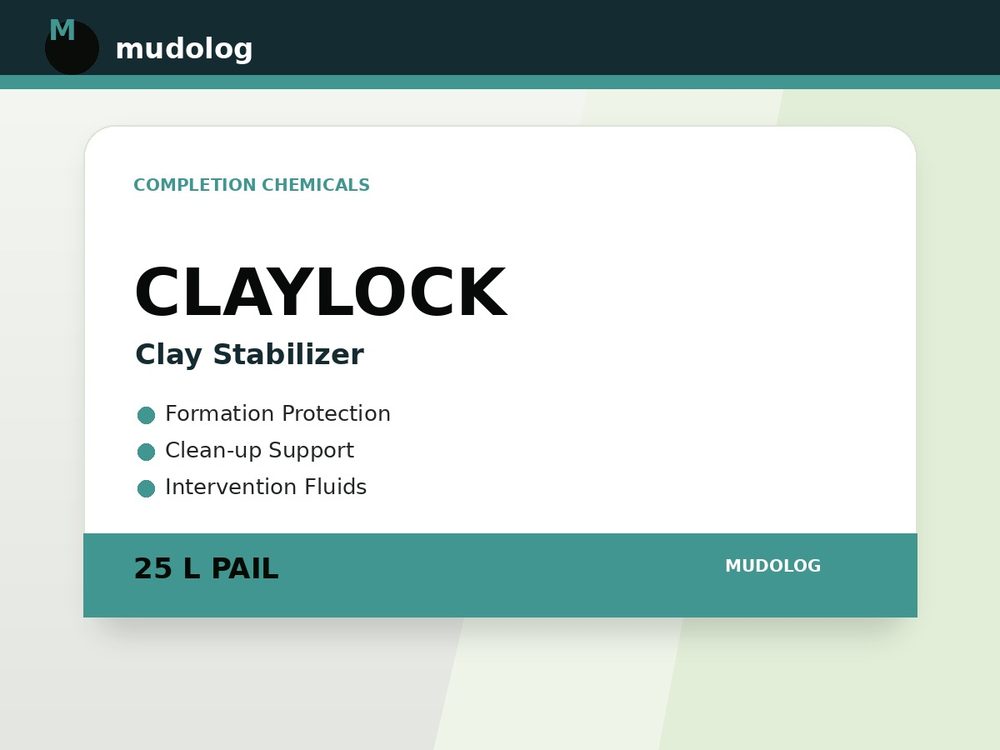 MUDOCLAY-OFFReactive Clay Inhibitor & Stabilizer
Reactive clay inhibitor and stabilizer for water-sensitive clay and shale in compatible drilling and completion fluids.
View product → MUDOLUBEDrilling Lubricant
Liquid drilling lubricant for water-based mud systems where friction, torque, drag and sticking tendency must be controlled.
View product →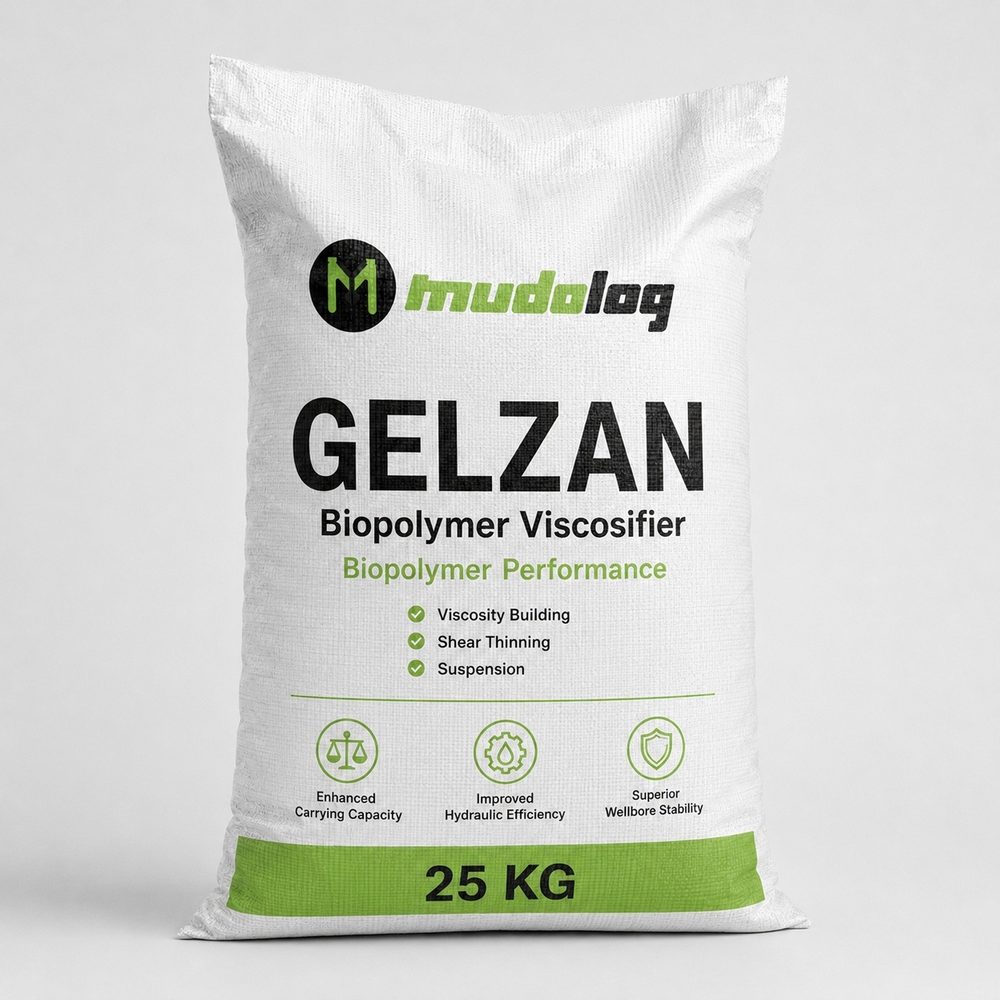 MUDOZANBiopolymer Viscosifier
Biopolymer viscosifier for strong low-shear viscosity, suspension and carrying capacity.
View product →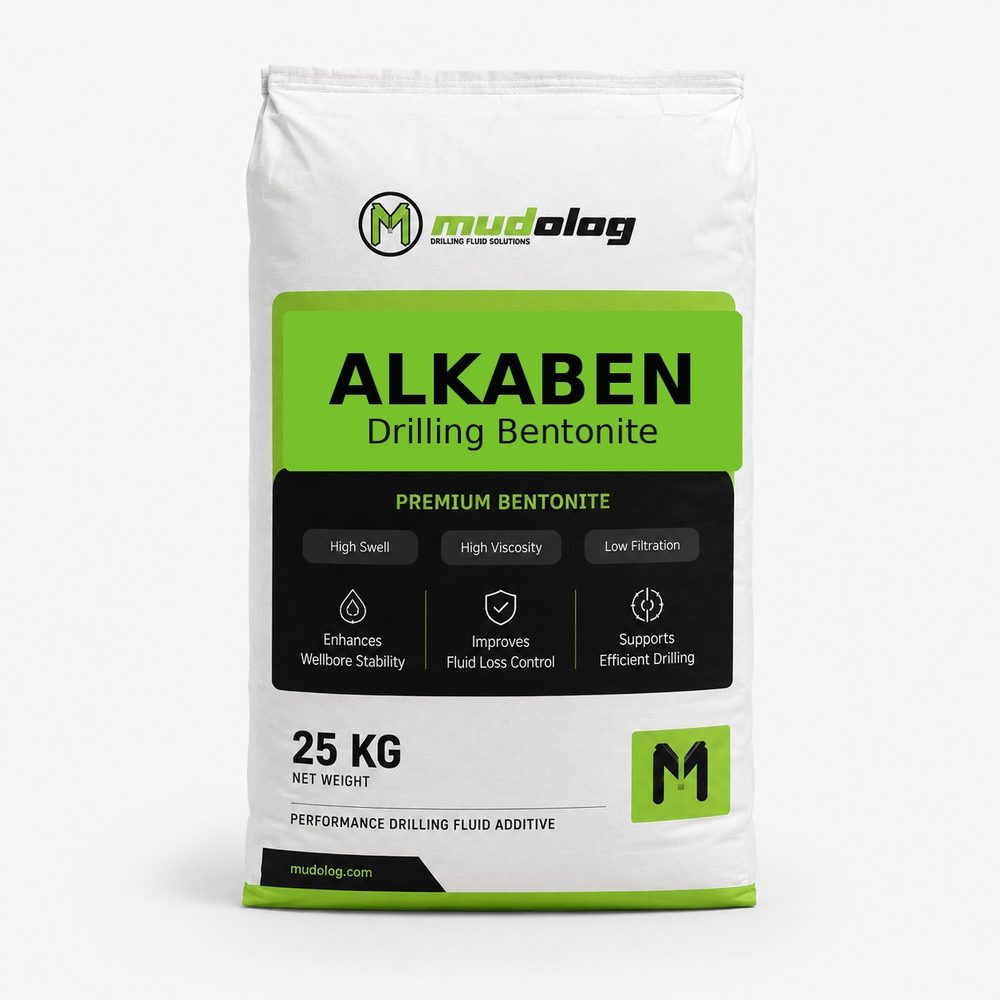 ALKABENDrilling Bentonite
Bentonite-based drilling additive supplied in 25 kg bags.
View product →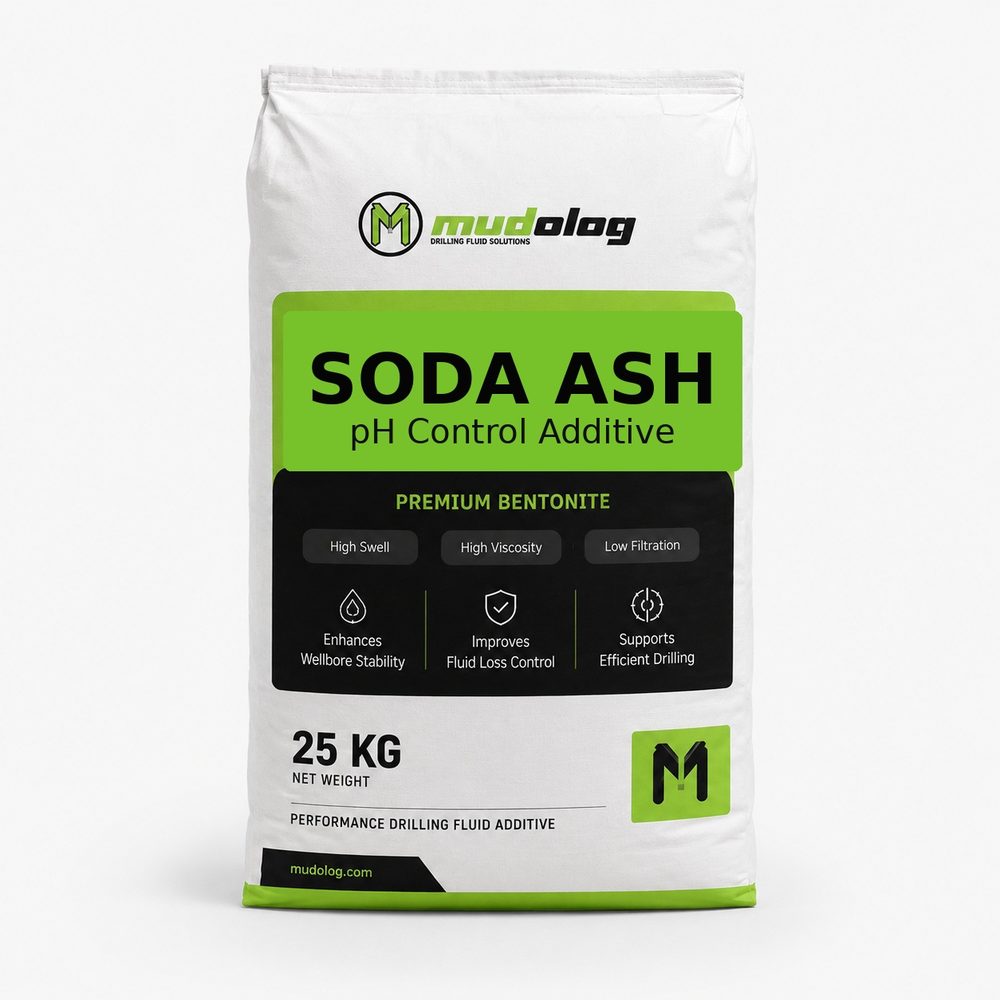 SODA ASHpH Control Additive
Soda ash for pH, alkalinity and make-up water conditioning.
View product →Build the fluid around the actual water, formation and field symptom
Share the bore geometry, make-up water, current mud, returns and the specific clay, cleaning, filtration, friction or loss problem. Mudolog can then route the enquiry to the correct product function.