
HDD Drilling Fluids Selection Guide
Horizontal directional drilling problems are rarely solved by adding one more chemical. Start with the formation, make-up water, returns, solids loading, bore geometry and the specific fluid function that is missing.
Hardness, calcium, magnesium, salinity and pH can change bentonite and polymer response before drilling even starts.
Sand/gravel, reactive clay and fractured ground demand different fluid functions.
High torque may come from cuttings beds, clay or poor cleaning rather than friction alone.
PAC/CMC controls filtration; SEALFIBER and FRACPLUG address whole-mud losses.
Start with the make-up water
A good HDD programme begins before the first bag of bentonite or polymer enters the tank. Check pH, hardness and calcium where possible; check conductivity when salinity is suspected. SODA ASH can support make-up-water conditioning where soluble calcium and alkalinity need correction. SODIUM BICARBONATE and CITRIC ACID belong to more specific contamination or controlled-correction cases and should not be treated as interchangeable pH chemicals.
Match the fluid to the formation
Sand and gravel usually emphasize carrying capacity, suspension, bore support and filtration. Reactive clay adds hydration, swelling, stickiness and dispersion. POLYWELL supports cuttings integrity and reactive-solids control; MUDOCLAY-OFF belongs to the inhibition/stabilization side. ALKABEN, MUDOZAN and filtration-control products should then be selected according to what the base fluid still needs.
 POLYWELLPowder Drilling Polymer
Powder drilling polymer for encapsulation, cuttings integrity, reactive-solids control and borehole stability.
View product →MUDOCLAY-OFFReactive Clay Inhibitor & StabilizerReactive clay inhibitor and stabilizer for water-sensitive clay and shale in compatible drilling and completion fluids.
View product →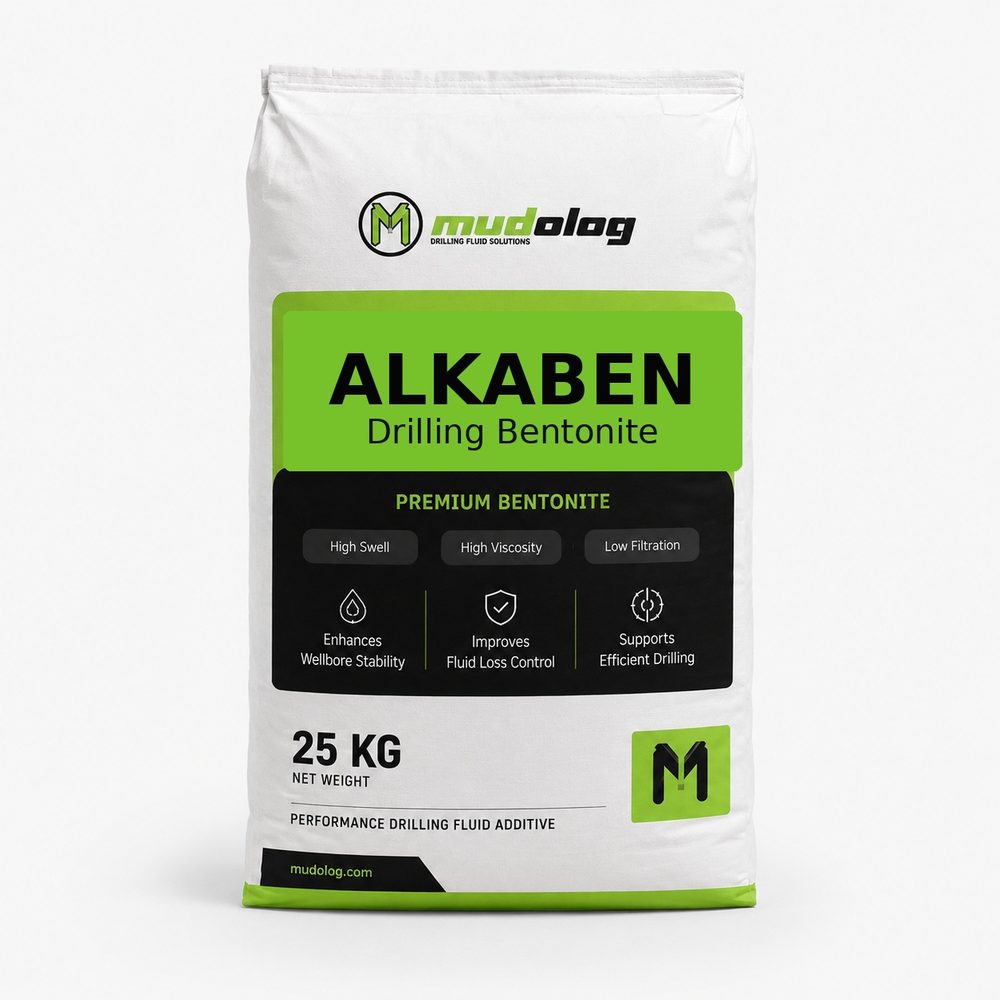 ALKABENDrilling Bentonite
Bentonite-based drilling additive supplied in 25 kg bags.
View product →Treat hole cleaning as a transport system
MUDOZAN can support suspension and low-shear carrying capacity; MUDOPAC HV combines filtration control with greater rheological contribution. Neither replaces adequate annular flow, controlled reaming or solids removal. MUDOLUBE belongs after the dominant clay, solids and hole-cleaning causes of torque have been considered.
Biopolymer viscosifier for strong low-shear viscosity, suspension and carrying capacity.
View product →MUDOLUBEDrilling LubricantLiquid drilling lubricant for water-based mud systems where friction, torque, drag and sticking tendency must be controlled.
View product →POLYWELLPowder Drilling PolymerPowder drilling polymer for encapsulation, cuttings integrity, reactive-solids control and borehole stability.
View product →Separate filtration from whole-mud loss
MUDOPAC LV, MUDOPAC HV and MUDOFIL-CMC are filtration-control routes. A fracture, void or coarse loss zone needs a sealing mechanism instead: SEALFIBER provides fibrous bridging and FRACPLUG provides a swelling/polymeric void-filling mechanism where compatible with the job.
PAC LV fluid loss additive for low-viscosity filtration control and stable filter cake formation.
View product →MUDOPAC HVPAC HV ViscosifierPAC HV additive for viscosity, carrying capacity and filtration control.
View product →MUDOFIL-CMCCMC Fluid Loss ControlCMC-based economical fluid loss control additive for water-based mud systems.
View product →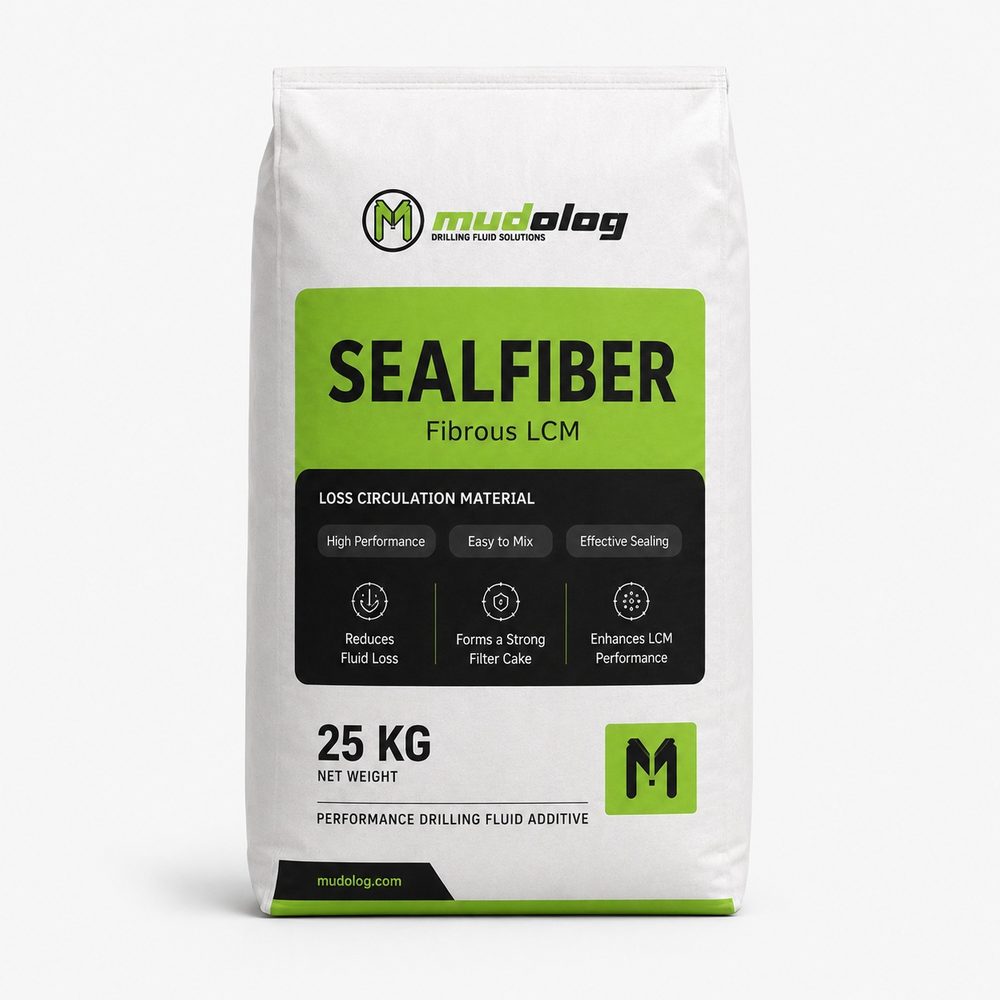 SEALFIBERFibrous LCM
Fibrous lost circulation material for bridging and sealing permeable zones.
View product → FRACPLUGSwelling LCM
Swelling lost circulation material for fractures, voids and highly permeable formations.
View product →Keep the field programme measurable
Use simple field measurements to decide what to change: make-up-water pH and hardness, Marsh funnel viscosity, mud weight, sand content, return volume and filtration where available. A trend across the shift is usually more informative than one isolated number.
Do not treat every HDD problem with more bentonite, polymer or lubricant
More chemical can increase solids, viscosity, pressure and cost without correcting the dominant mechanism. Identify the water, formation, solids, filtration, friction or loss problem first; then add only the function that is missing.
What Mudolog needs from you
Send the field variables that change the fluid decision. A short, technically complete HDD RFQ is more useful than a generic request for “mud chemical price”.
- Bore length and diameter
- Pilot / reaming / pullback stage
- Formation description
- Make-up water source and analysis if available
- Current mud formulation
- Main field symptom
- Whether full returns are maintained
- Marsh funnel / mud weight / sand content / fluid loss if available
Products by field function
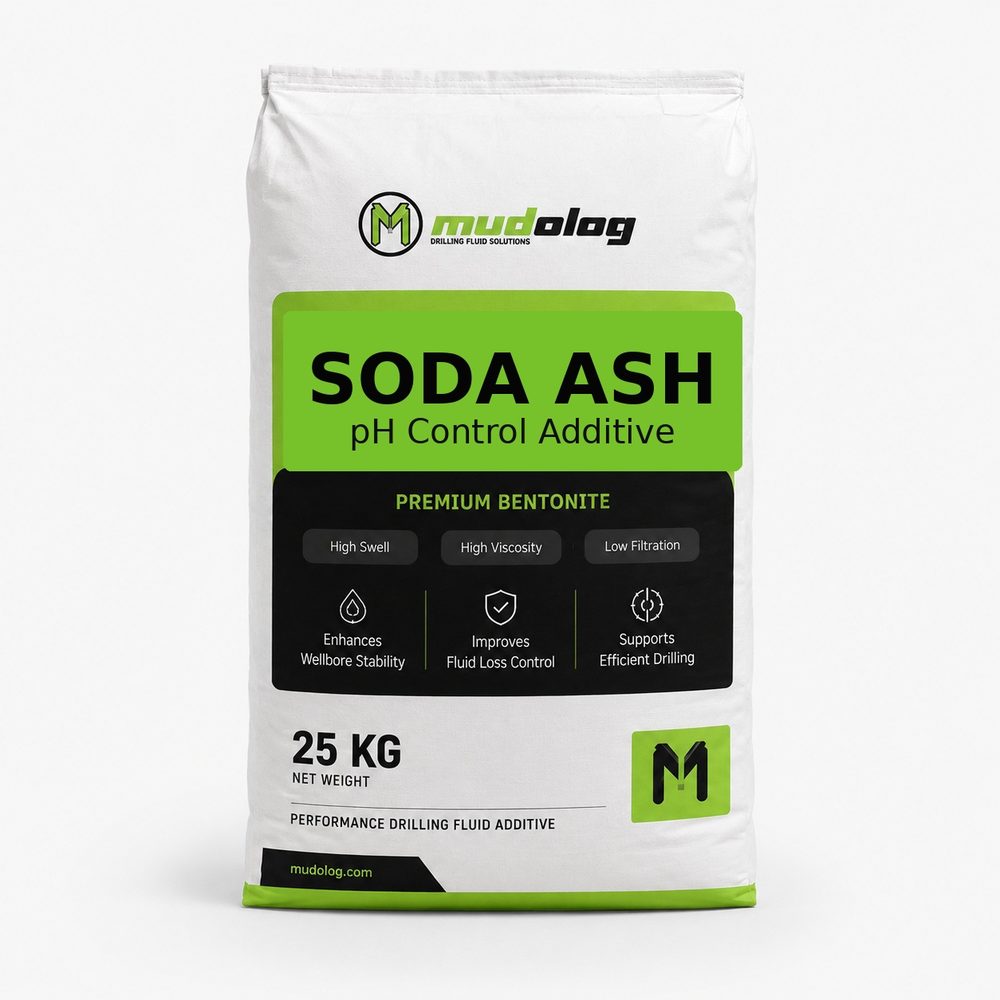 SODA ASHpH Control Additive
Soda ash for pH, alkalinity and make-up water conditioning.
View product →ALKABENDrilling BentoniteBentonite-based drilling additive supplied in 25 kg bags.
View product →POLYWELLPowder Drilling PolymerPowder drilling polymer for encapsulation, cuttings integrity, reactive-solids control and borehole stability.
View product →MUDOZANBiopolymer ViscosifierBiopolymer viscosifier for strong low-shear viscosity, suspension and carrying capacity.
View product →MUDOPAC LVPAC LV Fluid Loss ControllerPAC LV fluid loss additive for low-viscosity filtration control and stable filter cake formation.
View product →MUDOPAC HVPAC HV ViscosifierPAC HV additive for viscosity, carrying capacity and filtration control.
View product →MUDOFIL-CMCCMC Fluid Loss ControlCMC-based economical fluid loss control additive for water-based mud systems.
View product →MUDOLUBEDrilling LubricantLiquid drilling lubricant for water-based mud systems where friction, torque, drag and sticking tendency must be controlled.
View product →SEALFIBERFibrous LCMFibrous lost circulation material for bridging and sealing permeable zones.
View product →FRACPLUGSwelling LCMSwelling lost circulation material for fractures, voids and highly permeable formations.
View product →MUDODEFDefoamerDefoamer for rapid foam knockdown in mud tanks, pumps and circulation systems.
View product →MUDOCLAY-OFFReactive Clay Inhibitor & StabilizerReactive clay inhibitor and stabilizer for water-sensitive clay and shale in compatible drilling and completion fluids.
View product →Build the fluid around the actual water, formation and field symptom
Share the bore geometry, make-up water, current mud, returns and the specific clay, cleaning, filtration, friction or loss problem. Mudolog can then route the enquiry to the correct product function.