
HDD Drilling Fluids for Rock and Fractured Formations
Competent rock emphasizes dense-cuttings transport and friction; fractured rock adds partial or total loss of returns. The fluid programme should change when the formation condition changes.
Heavy cuttings and mechanical friction dominate.
Whole-mud losses can rapidly reduce effective hole cleaning.
Cuttings generation can outpace removal as hole diameter increases.
Reactive shale/clay intervals require a different chemistry from competent rock.
Rock hole cleaning comes first
MUDOZAN supports low-shear suspension and transport of dense cuttings. A good fluid still needs sufficient flow and reaming discipline; no viscosifier can carry unlimited solids through an overloaded annulus.
Use lubricant for friction, not for cuttings beds
MUDOLUBE becomes directly relevant where returns are acceptable and the bore is clean but mechanical torque/drag remains high. Poor returns plus high torque point toward hole cleaning before lubrication.
Fractures require a sealing mechanism
A sudden fall in returns in fractured rock is not just a rheology problem. SEALFIBER can provide fibrous bridging; FRACPLUG can add swelling/polymeric void filling where compatible with pumps, tools and screens.
Mixed reactive seams change the programme
When a rock bore enters swelling or dispersive clay, POLYWELL/DRILL-WELL support cuttings integrity and MUDOCLAY-OFF supports inhibition/stabilization where required.
 POLYWELLPowder Drilling Polymer
Powder drilling polymer for viscosity, cuttings transport, clay control and borehole stability.
View product →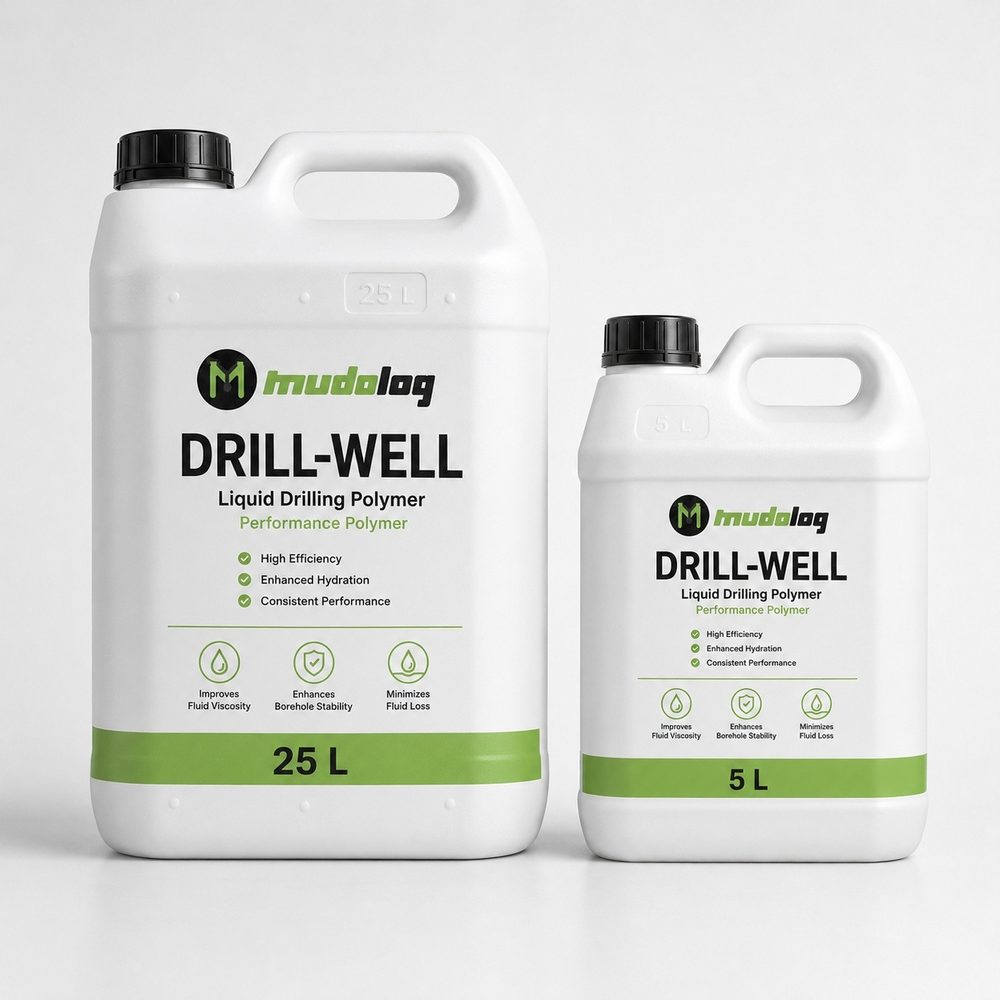 DRILL-WELLLiquid Drilling Polymer
Fast-mixing liquid polymer for practical field dosing in HDD, water well and core drilling.
View product → MUDOCLAY-OFFReactive Clay Inhibitor & Stabilizer
Reactive clay inhibitor and stabilizer for water-sensitive clay and shale in compatible drilling and completion fluids.
View product →Pumpability matters with LCM
The technically correct bridging package still has to reach the loss zone. Before selecting LCM size and blend, check mixer, pump, nozzles, downhole tools and recycler restrictions.
Do not treat severe fractured-rock losses only with more viscosity
If whole mud is disappearing, a thicker fluid can increase pumping pressure while the fracture remains open. Quantify returned volume and move to a loss-control strategy when the mechanism is confirmed.
What Mudolog needs from you
Send the field variables that change the fluid decision. A short, technically complete HDD RFQ is more useful than a generic request for “mud chemical price”.
- Rock type if known
- Fracture/fissure condition
- Bore length
- Pilot / reamer diameter
- Pump capacity or flow if known
- Current fluid
- Return status
- Approximate loss rate
- Torque / pullback symptoms
Products by field function
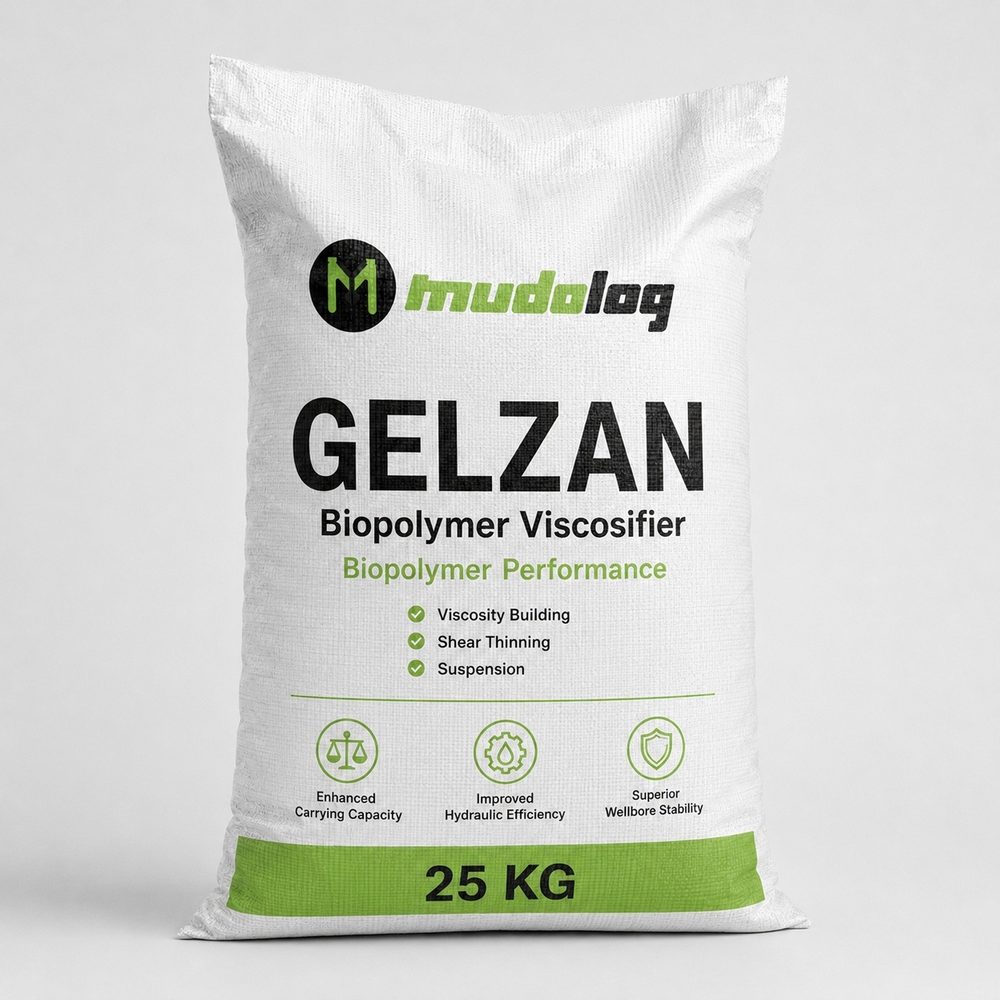 MUDOZANBiopolymer Viscosifier
Biopolymer viscosifier for strong low-shear viscosity, suspension and carrying capacity.
View product → MUDOLUBEDrilling Lubricant
Liquid drilling lubricant for water-based mud systems where friction, torque, drag and sticking tendency must be controlled.
View product →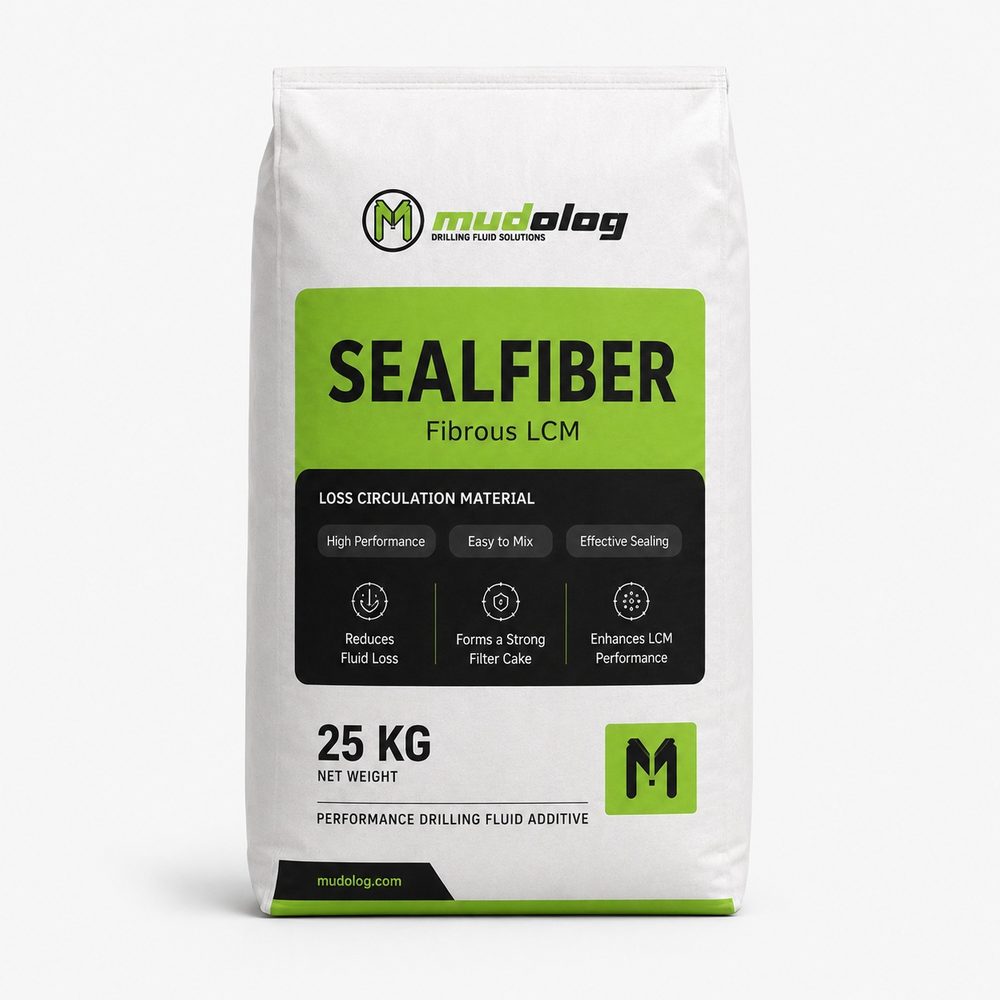 SEALFIBERFibrous LCM
Fibrous lost circulation material for bridging and sealing permeable zones.
View product → FRACPLUGSwelling LCM
Swelling lost circulation material for fractures, voids and highly permeable formations.
View product →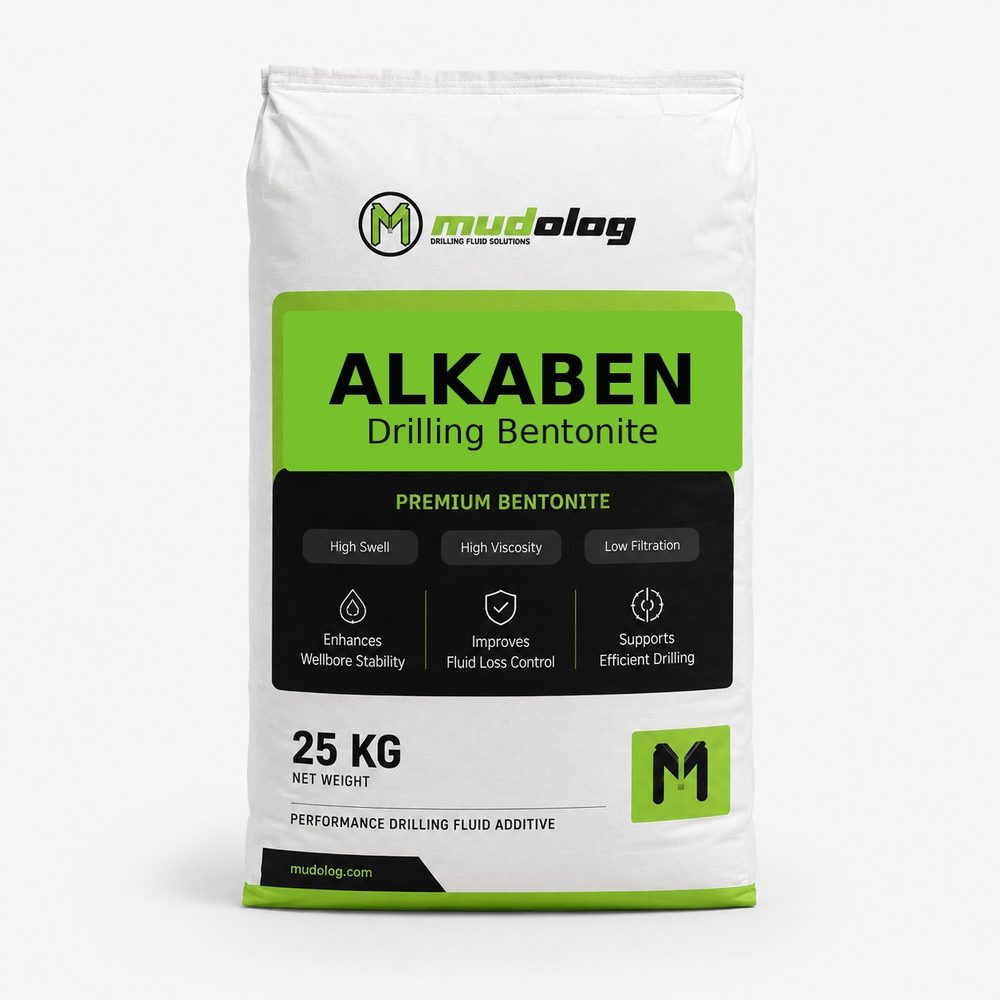 ALKABENDrilling Bentonite
Bentonite-based drilling additive supplied in 25 kg bags.
View product →POLYWELLPowder Drilling PolymerPowder drilling polymer for viscosity, cuttings transport, clay control and borehole stability.
View product →DRILL-WELLLiquid Drilling PolymerFast-mixing liquid polymer for practical field dosing in HDD, water well and core drilling.
View product →MUDOCLAY-OFFReactive Clay Inhibitor & StabilizerReactive clay inhibitor and stabilizer for water-sensitive clay and shale in compatible drilling and completion fluids.
View product →Build the fluid around the actual water, formation and field symptom
Share the bore geometry, make-up water, current mud, returns and the specific clay, cleaning, filtration, friction or loss problem. Mudolog can then route the enquiry to the correct product function.